

For $10 a month, or $100 a year, you support a simple mission: spread great data visualisation wherever it comes from. You help fund the work of finding, sourcing and explaining the charts that deserve a wider audience. And you back a publication built on generosity, transparency and the belief that better understanding makes a better world.CHART 1 • YouTube’s rise redraws the media hierarchy
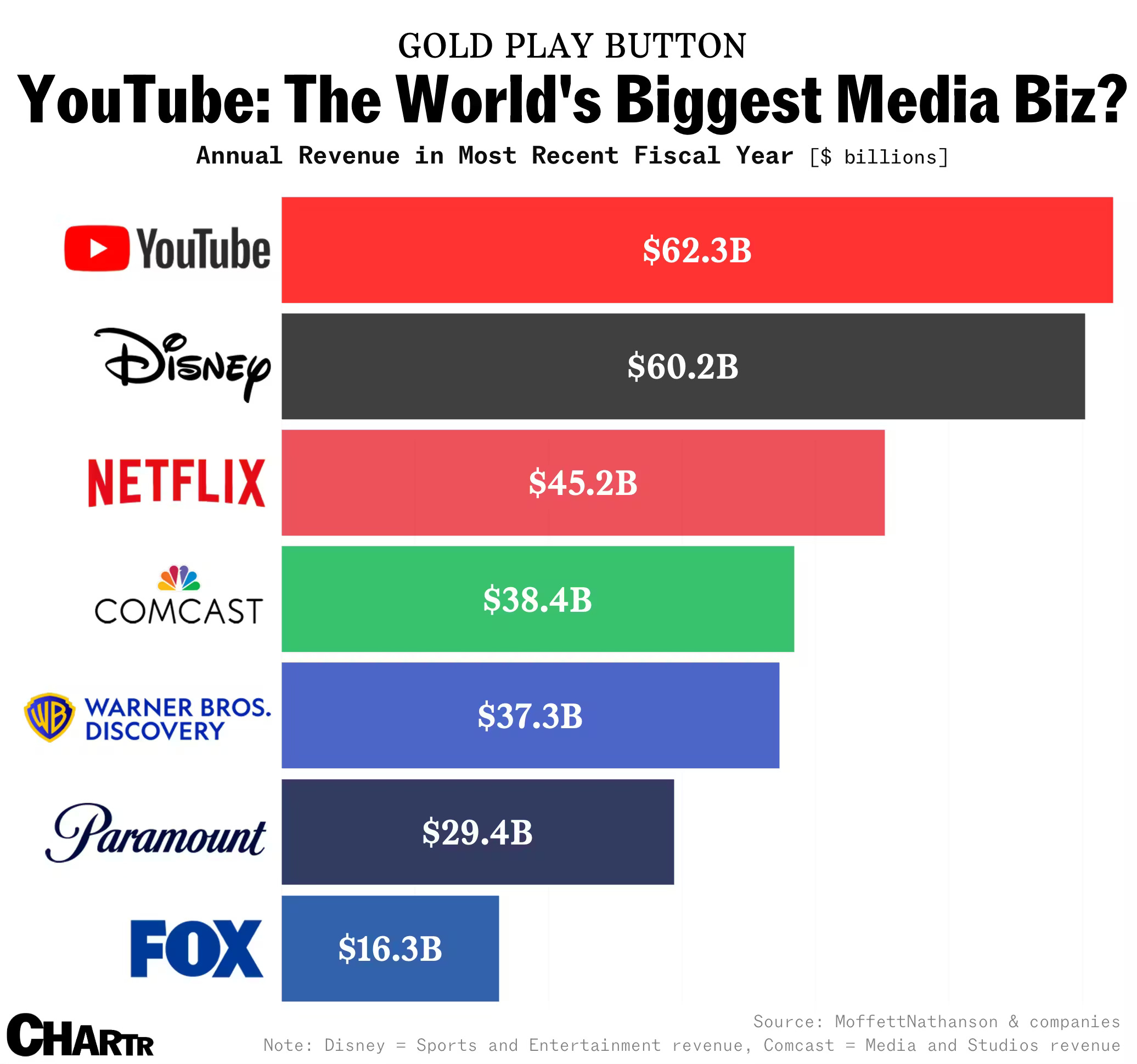
For decades, scale in media was defined by studios, networks, and the ability to finance expensive content. That hierarchy is now being quietly overturned. YouTube, a platform built largely on user generated content, has moved ahead of traditional media groups on revenue, edging past Disney and widening the gap with the rest of the industry.
What makes this shift notable is not just the size, but the structure. YouTube combines advertising with a growing subscription base, creating a dual revenue engine that legacy media companies are still trying to replicate. Advertising alone exceeds $40 billion, while subscriptions add a second layer of stability. This is a very different model from studios that depend heavily on hit driven content cycles.
The economics follow from that structure. Traditional media must continually invest in production, absorbing both the cost and the risk of failure. YouTube outsources that risk to creators, turning content into a distributed ecosystem rather than a balance sheet burden. The result is a platform that scales without the same capital intensity, allowing revenue to grow without a proportional rise in costs.
Source: Chartr
For decades, power sat with those who could finance content, control distribution, and own the audience. That model is now being quietly dismantled. YouTube has moved ahead not by outspending traditional media, but by changing the economics entirely. It scales without carrying the same risk, turning content into a network rather than a cost.
There is also a deeper question about what this means over time. When scale is driven by engagement rather than production, the incentives begin to change. What gets created, how it is consumed, and how it affects behaviour all start to follow a different logic.
I’ve got four more charts that expand on this story, but they’re for paid subscribers. Consider joining if you want the full edition.
