

For $10 a month, or $100 a year, you support a simple mission: spread great data visualisation wherever it comes from. You help fund the work of finding, sourcing and explaining the charts that deserve a wider audience. And you back a publication built on generosity, transparency and the belief that better understanding makes a better world.CHART 1 • Why US Treasuries failed investors during the Iran war
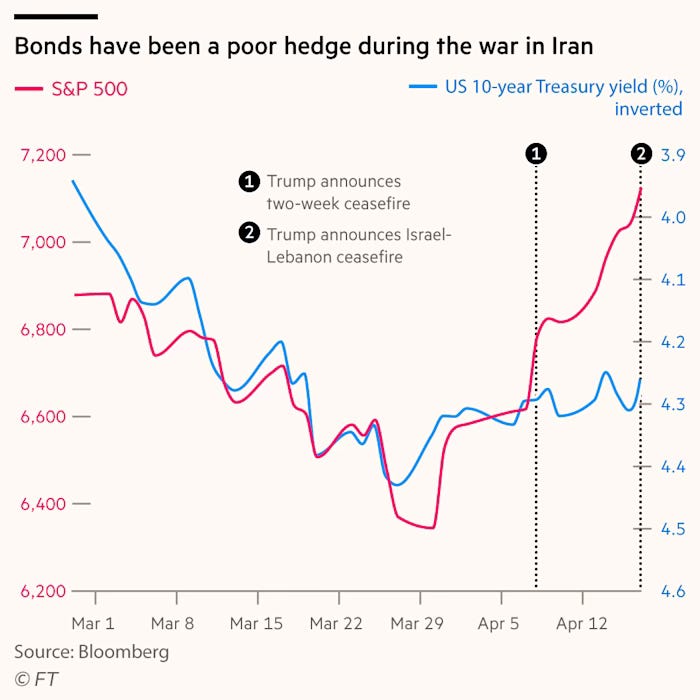
The surprise was not that stocks fell when war broke out between Israel and Iran. It was that bonds failed to provide much shelter. By mid April, the S&P 500 had recovered its losses, yet 10 year Treasury yields remained above where they stood before the fighting, as markets focused less on fear and more on oil, inflation and the prospect of delayed rate cuts.
That matters because Treasuries are supposed to soften the blow when equities wobble. This time, higher crude prices undermined that role. Rising tension around Hormuz kept inflation concerns alive even as ceasefire hopes improved sentiment, turning what might once have been a classic flight to safety into something far less reassuring.
The wider lesson is awkward. In a world shaped by supply shocks, bonds may no longer offer reliable protection when conflict threatens energy flows. The old stock and bond hedge still works in some crises, but it looks less dependable in this kind of one.
Source: Financial Times
Bonds do not always hedge war. Higher oil prices do not always help refiners. Strategic reserves do not always mean strategic certainty. Sometimes the stress appears not in the headline price, but in the system behind it.
That is where markets become more human. We like to believe there is always a buffer, a fallback, a safe asset, a spare route, a stockpile somewhere. But the world is often more fragile than the spreadsheet suggests.
I’ve got four more charts that expand on this story, but they’re for paid subscribers. Consider joining if you want the full edition.
