


For $10 a month, or $100 a year, you support a simple mission: spread great data visualisation wherever it comes from. You help fund the work of finding, sourcing and explaining the charts that deserve a wider audience. And you back a publication built on generosity, transparency and the belief that better understanding makes a better world.CHART 1 • Why tech layoffs are still spreading in 2026
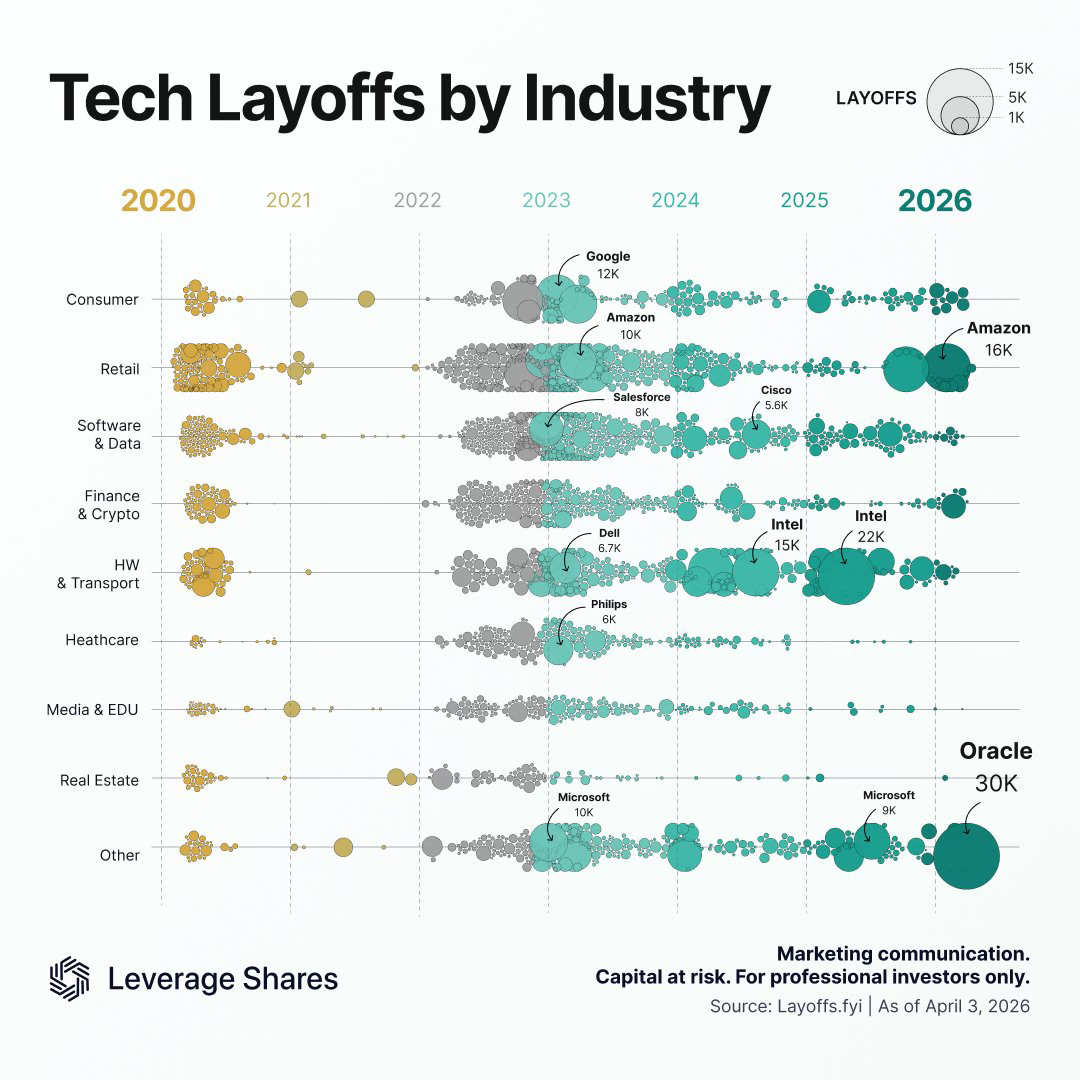
The real surprise is not that tech is still cutting jobs. It is how much the pain has spread beyond the old post pandemic reset. Layoffs are no longer confined to overhyped start ups or one bad year in software. By early April, the cuts were running across retail, hardware, finance, healthcare and enterprise tech, with fresh rounds at Oracle, Amazon and Intel showing that even profitable giants are still pruning hard.
That makes this chart less a story about one sector in decline than one in transition. Companies keep presenting these cuts as efficiency drives, restructuring or AI investment, which is partly true, but it also reflects a deeper shift in how management now thinks about headcount. Labour is being treated less as something to rebuild after a downturn and more as a variable cost to be kept permanently lean.
The uncomfortable implication is that this may not be a normal layoff cycle at all. Previous waves tended to follow clear booms and busts. This one is happening while demand for digital infrastructure remains high and capital spending on AI is booming. That suggests tech is not simply shrinking. It is reallocating, with workers bearing the cost of an industry trying to become more automated, more concentrated and less forgiving.
Source: Leverage Shares
Technological progress turns out to be less democratic than it first appears. New tools arrive wrapped in the language of liberation, but the spoils usually settle with the firms that own the choke points, shape behaviour or can afford to play the longest game.
That does not mean innovation is an illusion. Far from it. It means progress and power are not the same thing, and confusing the two is one of the easiest mistakes to make when an industry is moving quickly.
I’ve got four more charts that expand on this story, but they’re for paid subscribers. Consider joining if you want the full edition.
