


For $10 a month, or $100 a year, you support a simple mission: spread great data visualisation wherever it comes from. You help fund the work of finding, sourcing and explaining the charts that deserve a wider audience. And you back a publication built on generosity, transparency and the belief that better understanding makes a better world.CHART 1 • Why bond markets are reacting faster than policymakers
The shift in global rates is not about fear. It is about arithmetic. The Iran conflict has triggered an energy shock, and energy still feeds directly into inflation. Oil prices have surged, and markets have moved quickly to reprice what central banks can realistically do next.
The chart captures that repricing in real time. On the eve of the conflict, markets were positioned for lower rates. By March, that assumption had been reversed. Across the US, UK and euro area, yields have moved higher across the curve, with the largest shifts at the long end. That matters because long term yields reflect not just current inflation, but expectations about how persistent it will be.
This is where the story becomes more uncomfortable. Central banks are not facing a demand problem. They are facing a supply shock. Higher oil prices push inflation up even as growth slows. That limits their room to respond. Investors are no longer confident that rate cuts will arrive, and in some cases are beginning to price in further tightening.
What the chart shows is not panic, but constraint. Markets have already adjusted to a world where inflation proves harder to bring down, and policy becomes reactive rather than proactive.
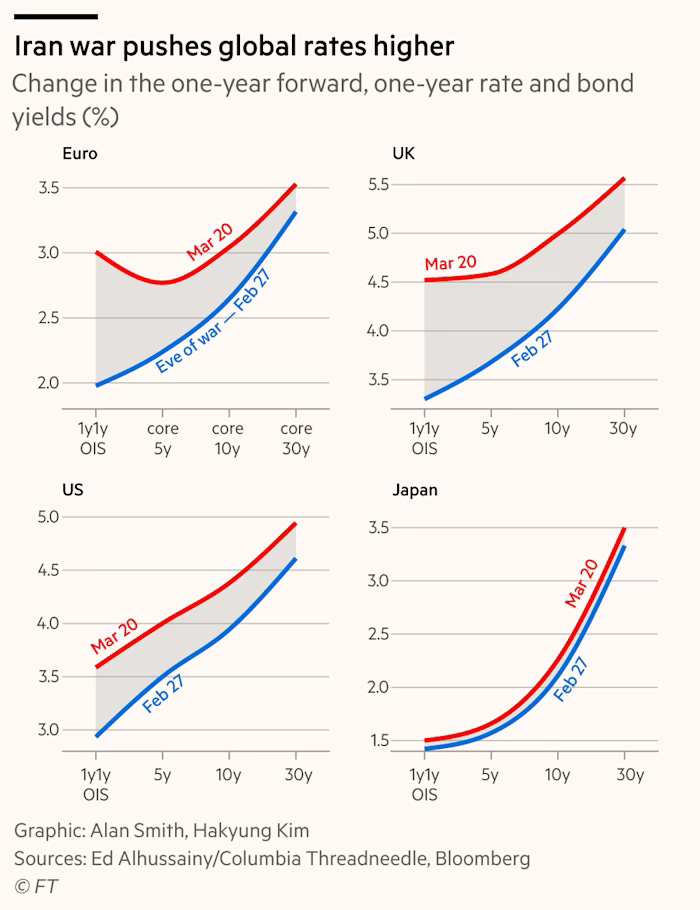
Source: Financial Times
What stands out is not just the scale of the moves, but the loss of control. Markets are adjusting faster than policymakers can respond, and in some cases in ways that undermine the tools those policymakers rely on. It leaves a sense that the system is reacting rather than steering.
I have four more charts that expand on where this pressure is building next and what it could mean for markets from here, but they are for paid subscribers. Consider joining if you want the full edition.
