


Good morning – here are your five chart for the day.
Right, so I’ve been touring Florida for the past week and a half with the family. And yes we have done a lot of swimming. My kids helped rescue a baby dolphin at Haulover beach. We have experienced both the Atlantic and Gulf coasts. Upon reflection, I can’t help but feel lucky – both my kids are great swimmers. And that has just made the whole experience even more wonderful. That’s why I think this first chart is particularly important. Forgive me, but my interpretation of the dataset might be a little different from what first meets the eye.
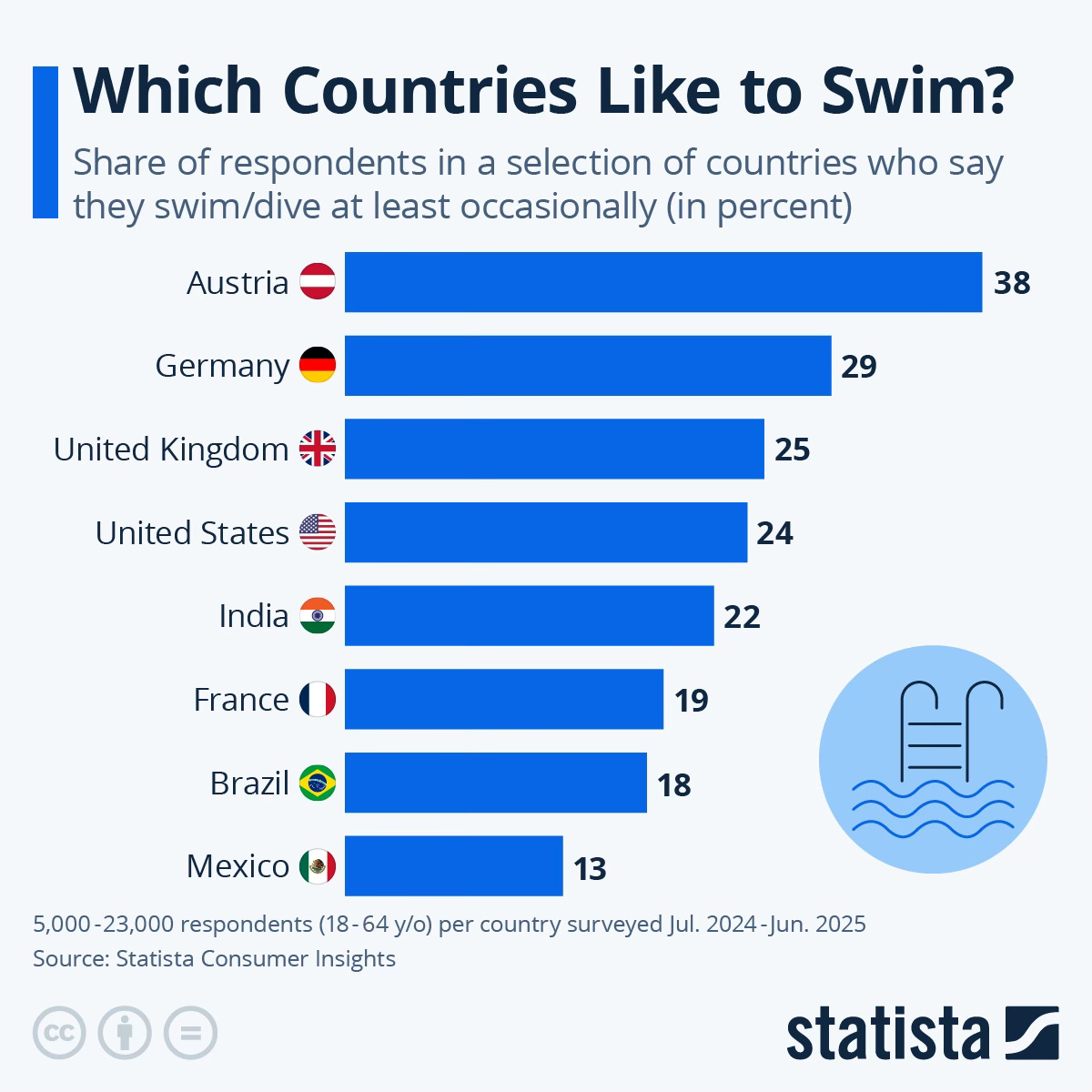
CHART 1 • Share of people who swim occasionally by country
These swimming statistics actually terrify me. Austria tops the global rankings, yet only 38% of Austrians swim occasionally in a nation fame for its beautiful lakes. Germany places second with a mere 30%, whilst the United States, United Kingdom, and France achieve mediocre rates of 20-25%. Brazil and India perform similarly, but Mexico's dismal 13% represents a national emergency for a country with 9,330 kilometres of coastline.
If Austria cannot even get four in ten citizens swimming, it makes you wonder. If more of us could swim, we could prevent a lot more deaths, particularly amongst children aged 5-14 who represent 19% of global drowning victims. Despite this deadly reality, fewer than a quarter of WHO member countries include swimming in their school curricula.
We've built our greatest cities beside water yet failed to teach the most basic survival skill. The WHO promotes lifeguards, weather alerts, and pool fencing: desperate measures that cannot compensate for mass inability to swim. As climate change brings unprecedented flooding and water-related disasters multiply, these participation rates reveal a species unprepared for its own planet. Even our "success stories" are failing. Sorry if that sounds dramatic, but it’s the hidden risks that are easy to ignore.
Source: Statista
Want the other four? Become a paid subscriber.
