

For $10 a month, or $100 a year, you support a simple mission: spread great data visualisation wherever it comes from. You help fund the work of finding, sourcing and explaining the charts that deserve a wider audience. And you back a publication built on generosity, transparency and the belief that better understanding makes a better world.CHART 1 • TIME Person of the Year shows who holds power
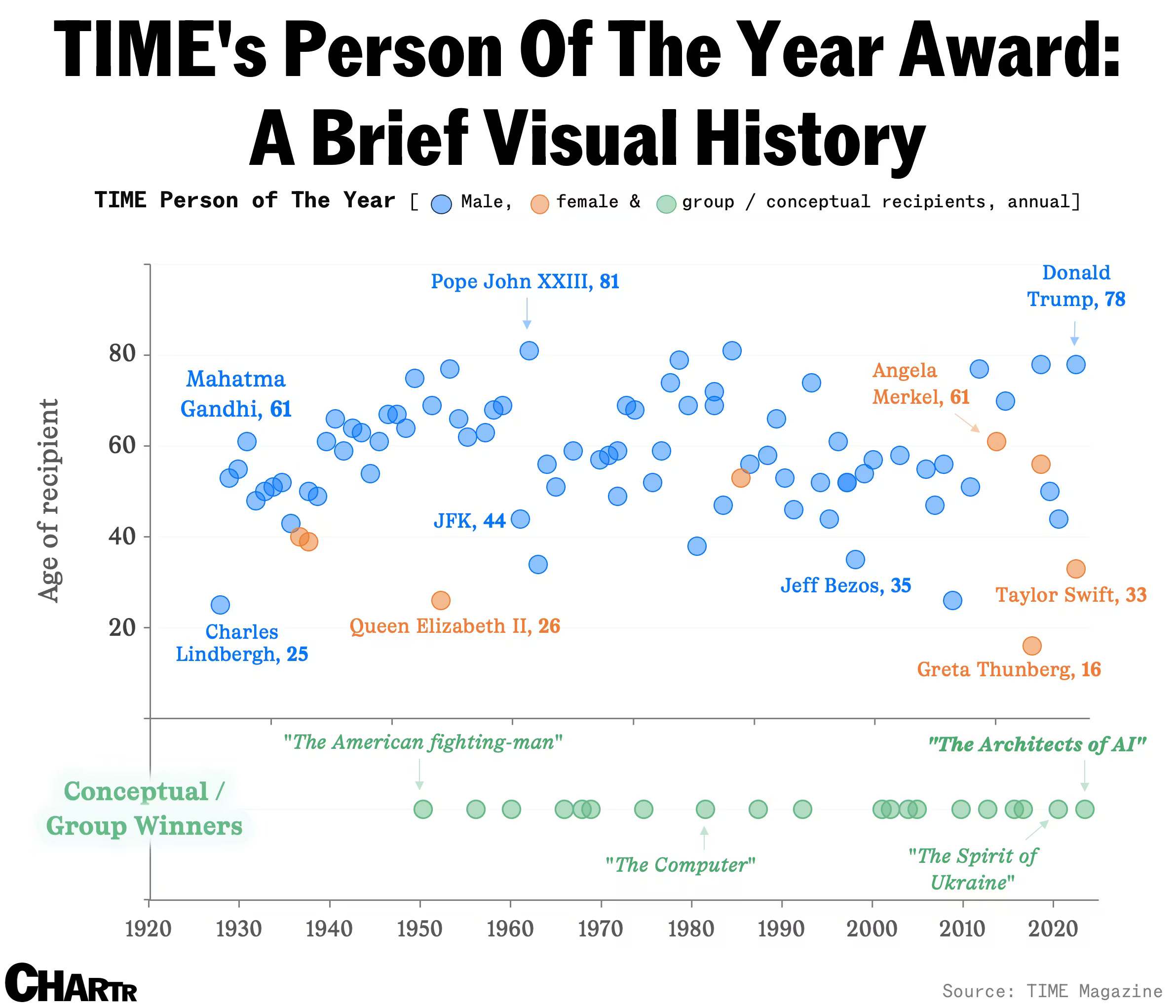
The TIME Person of the Year is a proxy for influence at the biggest moments of the last century. It is not about who is good. It is about who shapes events. This chart turns that idea into something you can actually see.
Most winners sit in a tight band between roughly 45 and 70, and for decades they are overwhelmingly male. Leaders like Gandhi, JFK, Pope John XXIII and later figures like Angela Merkel show how the award has often reflected institutional power and seniority. The centre of gravity is older, established, and usually political.
But two shifts stand out. First, modern winners include more cultural and tech figures at younger ages, from Jeff Bezos to Taylor Swift, and Greta Thunberg at just 16. Second, the award increasingly goes to groups or concepts rather than a single person. The computer, the spirit of Ukraine, the architects of AI. That is a tell. Influence is moving from individual leaders to systems, platforms and collective forces.
This chart is a timeline of what society thinks drives history. Sometimes it is a president. Sometimes it is a movement. Increasingly it is a technology.
Source: Chartr
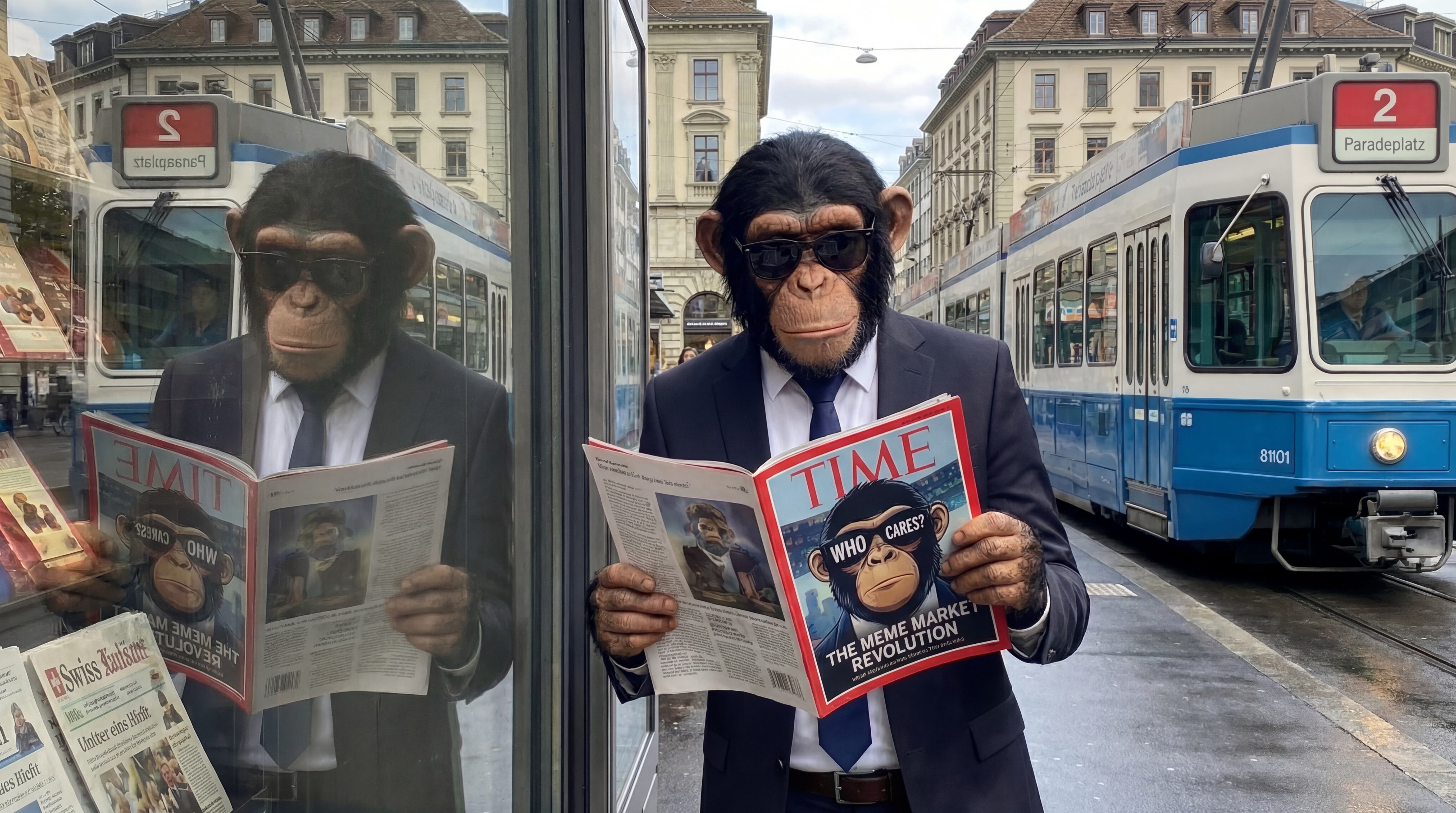
We still look for faces, leaders and villains, even as influence slips into structures that are harder to see and harder to hold accountable. Power has not vanished. It has become more abstract. You especially notice this on social media – at lease I do as a Top Voice on Linkedin. That why I’ve concluded “who cares” about who is TIME Person of the Year – it’s going to change next year anyway.
I’ve got more charts that build on this idea and trace how power is shifting across politics, markets and culture. They are for paid subscribers. Consider joining if you want the full edition and a clearer view of who really shapes the world now.
