

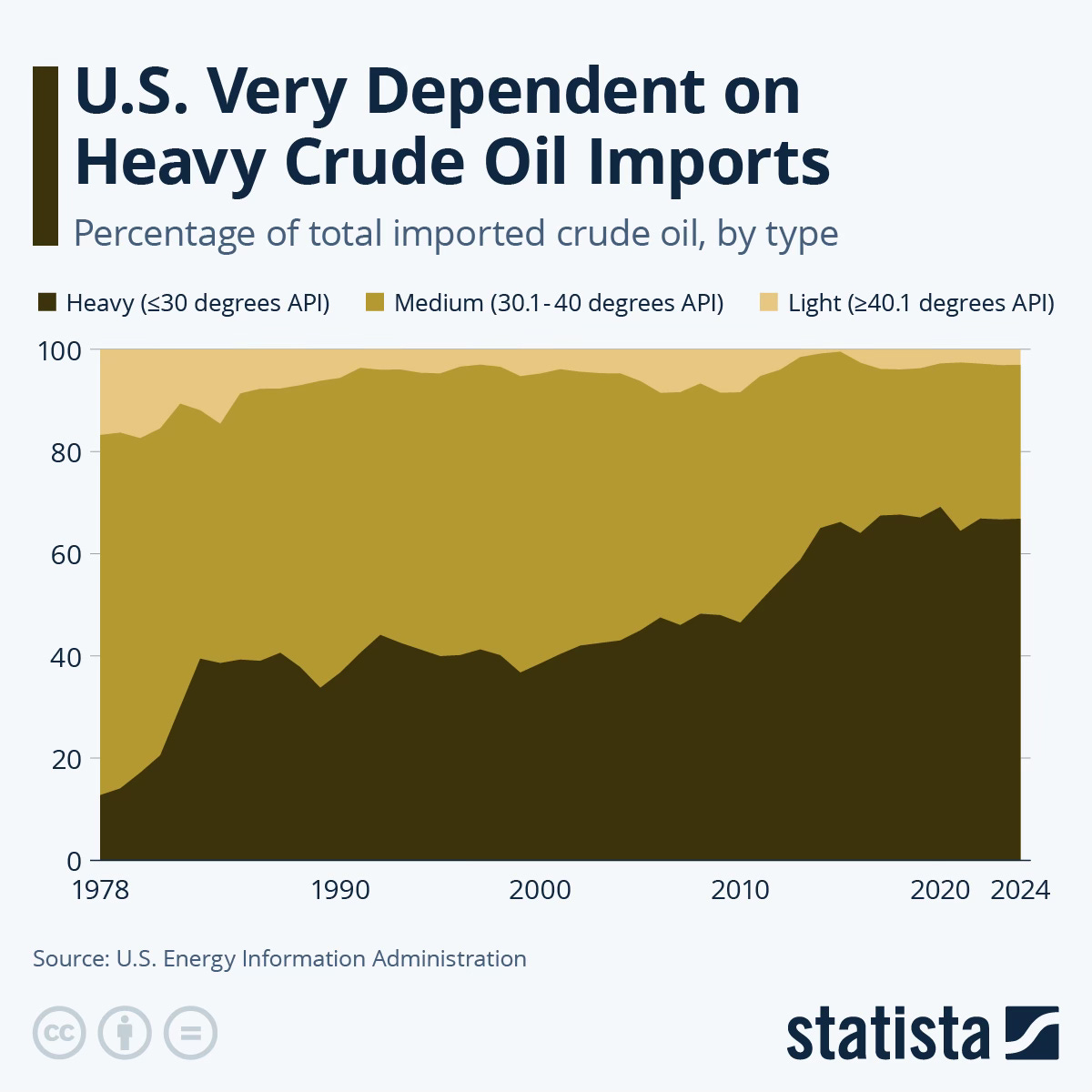
For $10 a month, or $100 a year, you support a simple mission: spread great data visualisation wherever it comes from. You help fund the work of finding, sourcing and explaining the charts that deserve a wider audience. And you back a publication built on generosity, transparency and the belief that better understanding makes a better world.CHART 1 • The US still imports heavy crude oil
Refineries on the US Gulf Coast were built to process thick, sulphur rich oil shipped in from abroad. Those plants were not designed for the light shale oil that now dominates domestic production, and changing them is slow and costly.
Over time, imported crude has become more heavily weighted towards heavy grades even as overall imports fell. Domestic output surged at the light end, but refineries still needed heavier barrels to keep running efficiently. Imports adjusted to fill that gap rather than disappearing.
The assumption is that rising domestic production removes dependence on foreign oil. The constraint is refinery design. Energy security is not just about how much oil is produced, but whether the system can process the oil available.
What happens to US fuel markets if heavy crude supply is disrupted rather than total oil supply?
Source: Statista
What stands out to me is how often confidence is built on abstractions. Barrels in the ground. GDP on a league table. Revenue growth on a slide. All useful, but incomplete. Real outcomes depend on whether systems can actually deliver when stress arrives.
I have four more charts to share with you, but they are for paid subscribers. If you want the full edition and the deeper context behind it, consider joining.
