

For $10 a month, or $100 a year, you support a simple mission: spread great data visualisation wherever it comes from. You help fund the work of finding, sourcing and explaining the charts that deserve a wider audience. And you back a publication built on generosity, transparency and the belief that better understanding makes a better world.CHART 1 • The AI productivity boom may already be fading
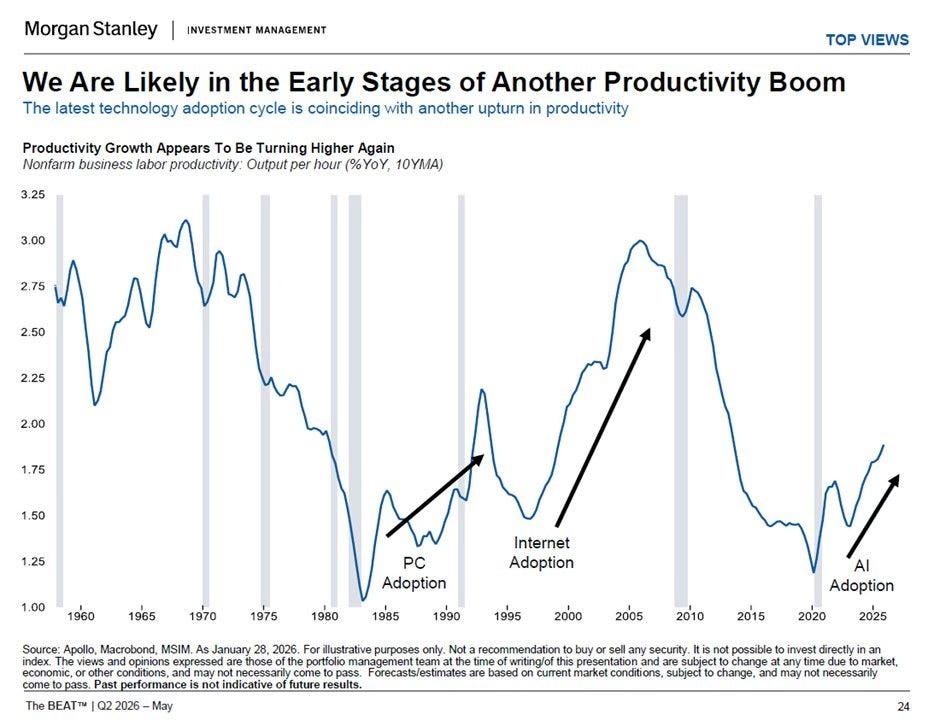
The seductive story is that AI is about to lift America into another productivity boom. The harder lesson from this chart is that productivity booms do not simply arrive. They diffuse, disappoint, accelerate and fade. Computers and the internet both raised output per hour, but only after businesses reorganised around them. Then the gains slowed.
That is why the recent AI upturn deserves interest, but not blind faith. US nonfarm business productivity rose 2.9% from a year earlier in the first quarter of 2026, yet only 0.8% at an annualised quarterly rate. The signal is promising, but noisy.
The missing half of the story is decline. Oil shocks, financial crises and weak investment can all crush productivity growth, while even successful technologies eventually become ordinary. AI may yet deliver a genuine boom. But history warns that the question is not only how fast productivity rises, but how long the rise can survive.
Source: Matteo Lombardo
Often economic debates are really arguments against movement. People want productivity without disruption, technology without job losses, migration without complexity and global capital without vulnerability.
But economies do not work like museum exhibits. They are living systems. They shed old roles, create new ones and force people, firms and governments to adjust whether they are ready or not.
I’ve got four more charts that expand on this story, but they’re for paid subscribers. Consider joining if you want the full edition.
