


For $10 a month, or $100 a year, you support a simple mission: spread great data visualisation wherever it comes from. You help fund the work of finding, sourcing and explaining the charts that deserve a wider audience. And you back a publication built on generosity, transparency and the belief that better understanding makes a better world.CHART 1 • Recession fears have fade surprisingly fast in the United States
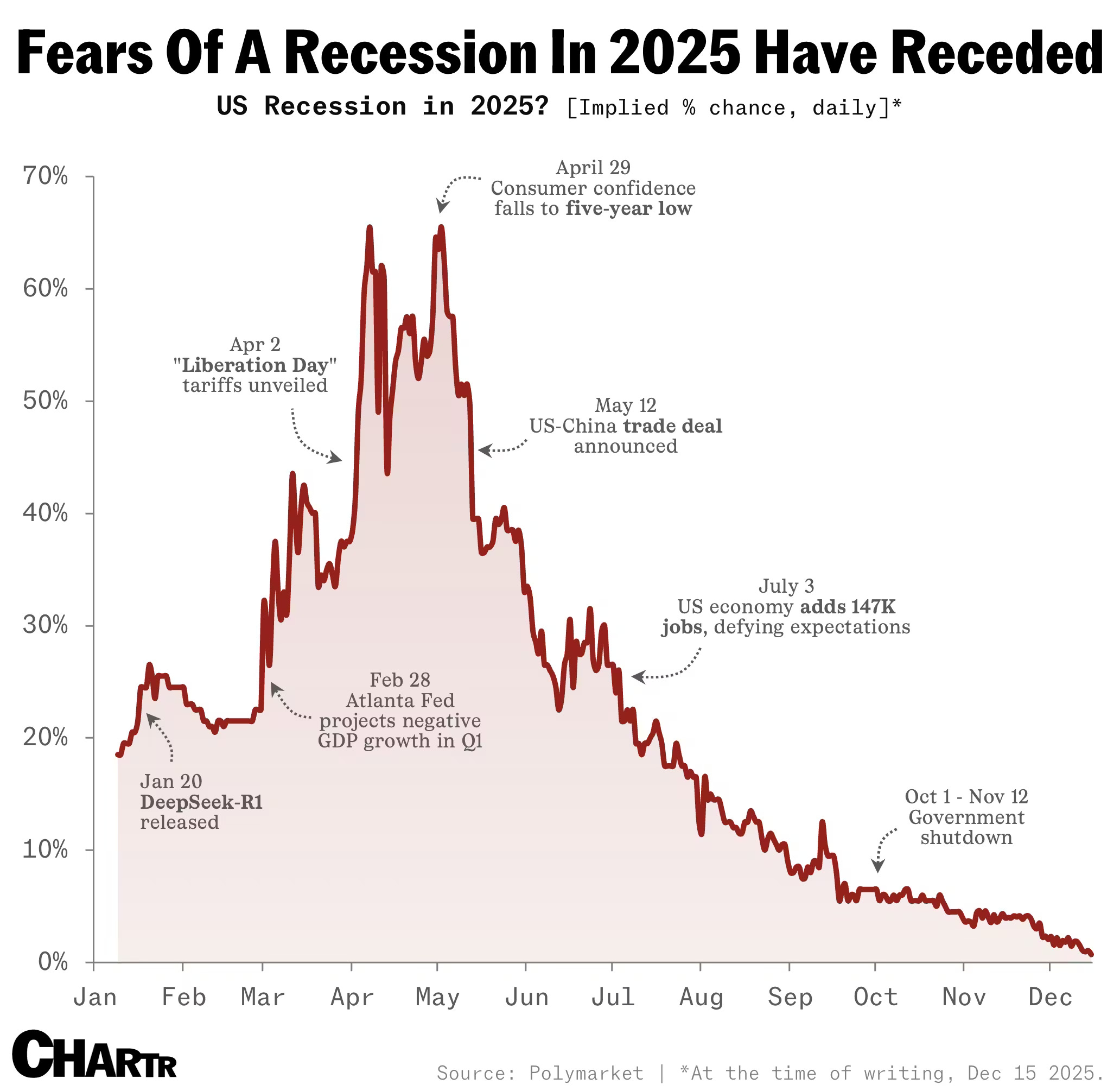
This chart matters because it shows how quickly collective fear can reverse, even when the underlying risks have not disappeared. At the start of 2025, markets were bracing for a US recession. By the end of the year, that fear had almost evaporated.
Recession probability surged above 60% in the spring as tariffs were unveiled, consumer confidence slumped to a five year low and the Atlanta Fed warned of negative GDP growth. The narrative was clear and convincing. Policy shock plus weakening data meant recession felt inevitable. But the peak did not last.
From May onwards, expectations collapsed. A US China trade deal, stronger than expected jobs growth and continued labour market resilience steadily pushed recession odds lower. By autumn, even a government shutdown barely moved the needle. By December, implied recession probability had fallen close to zero.
The deeper story is not that risks vanished, but that markets recalibrated. Growth held up. Employment stayed strong. The economy absorbed shocks that would have tipped it over in past cycles. At the same time, prediction markets responded more to realised data than to policy anxiety. Fear was front loaded. Relief was data driven.
The question now is whether this calm reflects genuine resilience, or whether markets have simply learned to look through risk until something finally breaks.
Source: Chartr
The economy has a habit of lulling people into comfort just as the bill begins to build. Market optimism, short term political gains and the thrill of new technology can distract from slower moving fractures in affordability, credibility and capacity.
I have four more charts for paid subscribers. Consider joining if you would like the full edition.
