

For $10 a month, or $100 a year, you support a simple mission: spread great data visualisation wherever it comes from. You help fund the work of finding, sourcing and explaining the charts that deserve a wider audience. And you back a publication built on generosity, transparency and the belief that better understanding makes a better world.CHART 1 • Putin’s shrinking public schedule exposes a bunker presidency
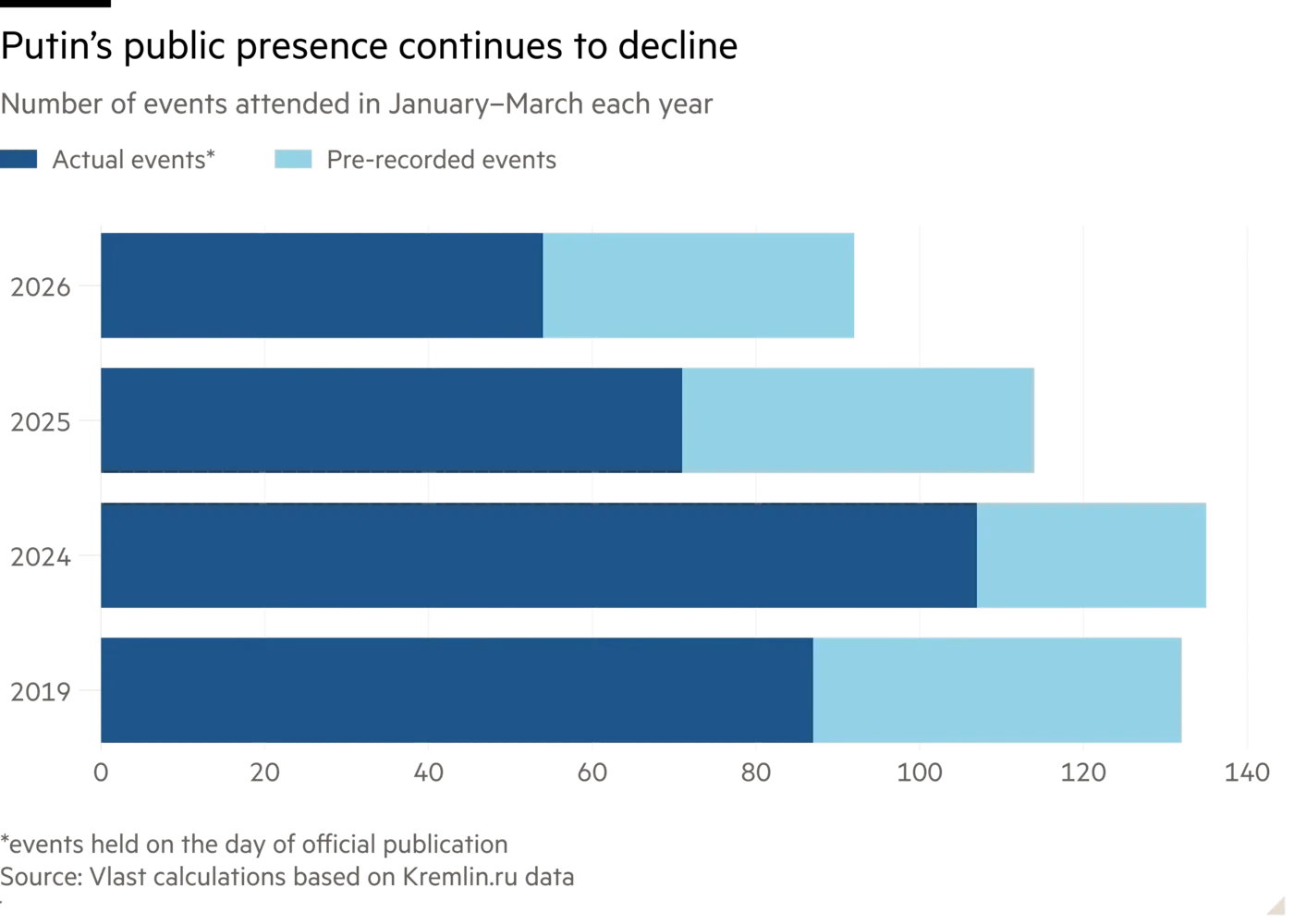
Vladimir Putin’s retreat from public view is becoming part of the story of wartime Russia. Vlast counted just 54 public meetings and events in the first three months of 2026, down from 71 in 2025 and 107 in the election year of 2024.
The decline looks less like normal diary management than a symptom of a more defensive presidency. The Financial Times reports that security around Putin has tightened sharply, with greater concern about drones, assassination risks and internal instability after Ukrainian attacks deep inside Russia.
That creates a dangerous contradiction. Putin’s authority depends on projecting command, but the war now appears to be narrowing his world. A leader built around strength is spending more time protected from the public, the elite and the consequences of his own conflict.
Source: Financial Times
Leaders talk about control, but the pressures underneath them are becoming harder to control: debt, fragmentation, security, migration, resources and the quiet exhaustion of public trust. Today’s chart is about Russia. But the same could be said for many countries in the West.
That does not mean the world is falling apart. It means the old bargains are being tested. And when those bargains weaken, the people with the fewest options usually feel it first.
