

For $10 a month, or $100 a year, you support a simple mission: spread great data visualisation wherever it comes from. You help fund the work of finding, sourcing and explaining the charts that deserve a wider audience. And you back a publication built on generosity, transparency and the belief that better understanding makes a better world.CHART 1 • How Buffett kept compounding against the odds
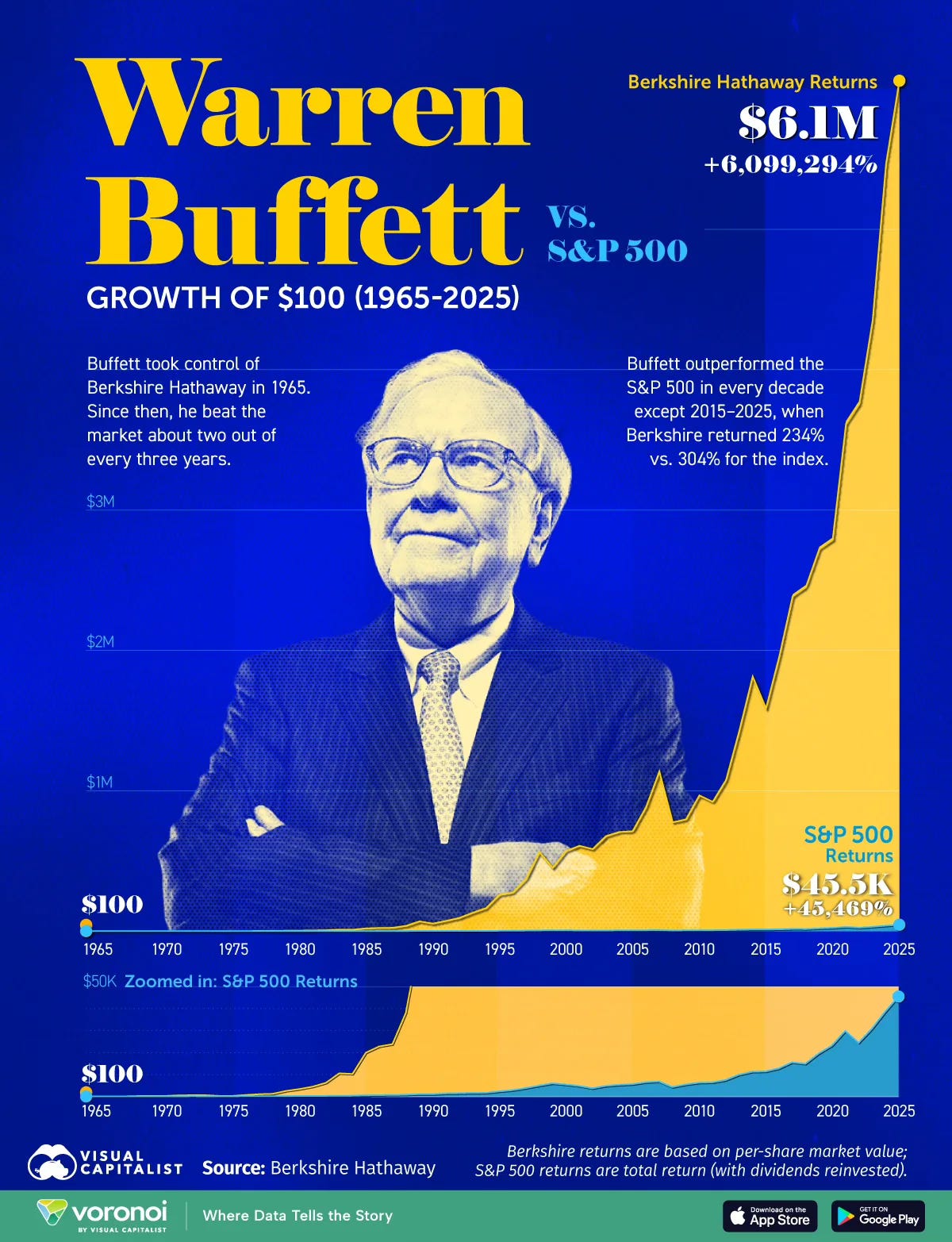
I have followed Warren Buffett for most of my working life. After more than 20 years in asset management, he is one of those figures who always seems to be there in the background, even if I have never fully subscribed to his investment philosophy. That is why this chart lands with me. It is not really about hero worship or tidy lessons from Omaha. It is about staying power.
What makes the record so striking is the backdrop. Since the Financial Crisis, markets have been shaped by ultra low interest rates, extraordinary monetary stimulus and a long period in which growth stocks set the tone. In that sort of environment, Berkshire could easily have looked like a relic from another age. Instead, Buffett kept steering the company, Berkshire kept expanding and his fortune kept compounding.
That, to me, is the real story. Not investment doctrine, but discipline. Compounding always looks clean and inevitable when compressed into a chart like this, but it rarely feels that way in real time. It means staying patient, looking unfashionable and carrying on while the market chases something else. Buffett’s achievement was not simply that he outperformed. It was that he kept going, and let time do the work.
Source: Visual Capitalist
What stays with me after looking at this set is how normalisation works. People adapt very quickly. They get used to new market regimes, new drugs, new career paths, new family structures and new forms of surveillance long before they have properly decided what they think of them. That is often how the world changes. Not with one dramatic rupture, but with a series of adjustments that stop feeling strange.
There is something both useful and unsettling in that. A society can become more flexible and more fragmented at the same time. It can open up new choices while quietly losing some of the old common assumptions that once gave people a clearer sense of direction.
I’ve got four more charts that expand on this story, but they’re for paid subscribers. Consider joining if you want the full edition.
