


For $10 a month, or $100 a year, you support a simple mission: spread great data visualisation wherever it comes from. You help fund the work of finding, sourcing and explaining the charts that deserve a wider audience. And you back a publication built on generosity, transparency and the belief that better understanding makes a better world.CHART 1 • Germany’s asylum numbers fall sharply
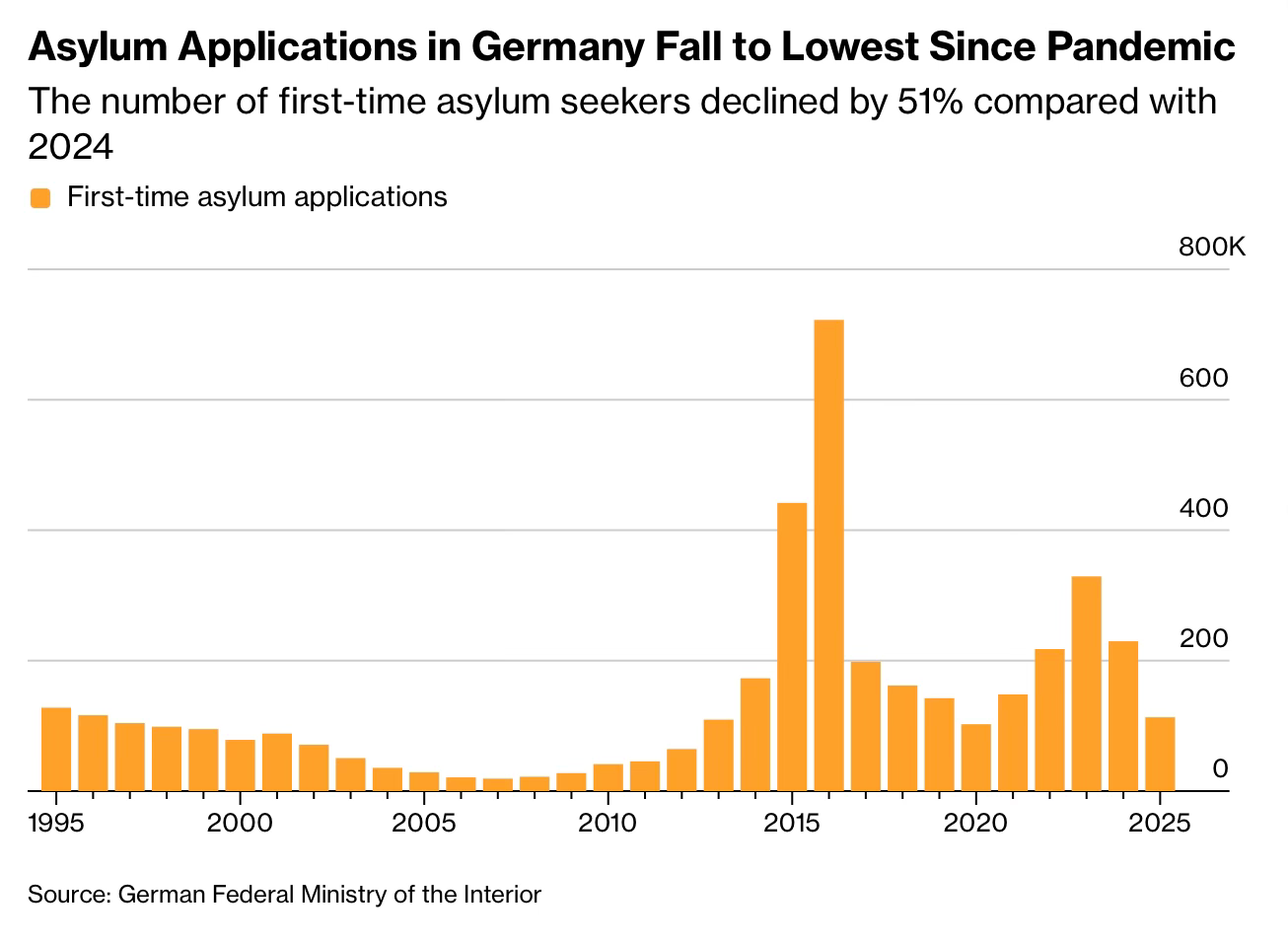
For much of the past decade, asylum has been a constant feature of Germany’s political and economic debate. This chart shows a clear break. First time asylum applications fell by 51% compared with 2024, dropping to their lowest level since the pandemic.
The longer history matters. Applications peaked during the 2015 to 2016 refugee crisis, when conflicts in Syria and elsewhere pushed annual numbers above 400,000. They then fell sharply, stabilised, and rose again after 2021 as borders reopened and new conflicts emerged. In 2023 and 2024, Germany still received the highest number of first time asylum applications in the EU. What stands out now is not just the decline, but how quickly it has happened.
Policy changes help explain part of the shift. Germany has tightened border controls, accelerated asylum processing and returns, and pushed for tougher EU wide measures, including cooperation with transit countries. At the same time, displacement pressures globally have not eased. Conflicts in Ukraine, the Middle East and parts of Africa continue. A fall in applications to Germany therefore says more about where and how people move, and how systems filter them, than about a reduction in the underlying drivers of migration.
Source: Bloomberg
How often are our decisions driven by what is visible now, and not by what is already set in motion? The biggest forces shaping outcomes tend to be gradual, cumulative and inconvenient to confront. They rarely announce themselves.
There is a human instinct at work here. We discount the distant future and overreact to the present. That bias shows up in policy, in investing, and in how societies manage risk. So, although having too many asylum seekers in Germany is a well publicised issue, data says it no longer is.
I have four more charts to share with you today, but they are for paid subscribers. If you want the full edition and the deeper context behind it, consider joining.
