

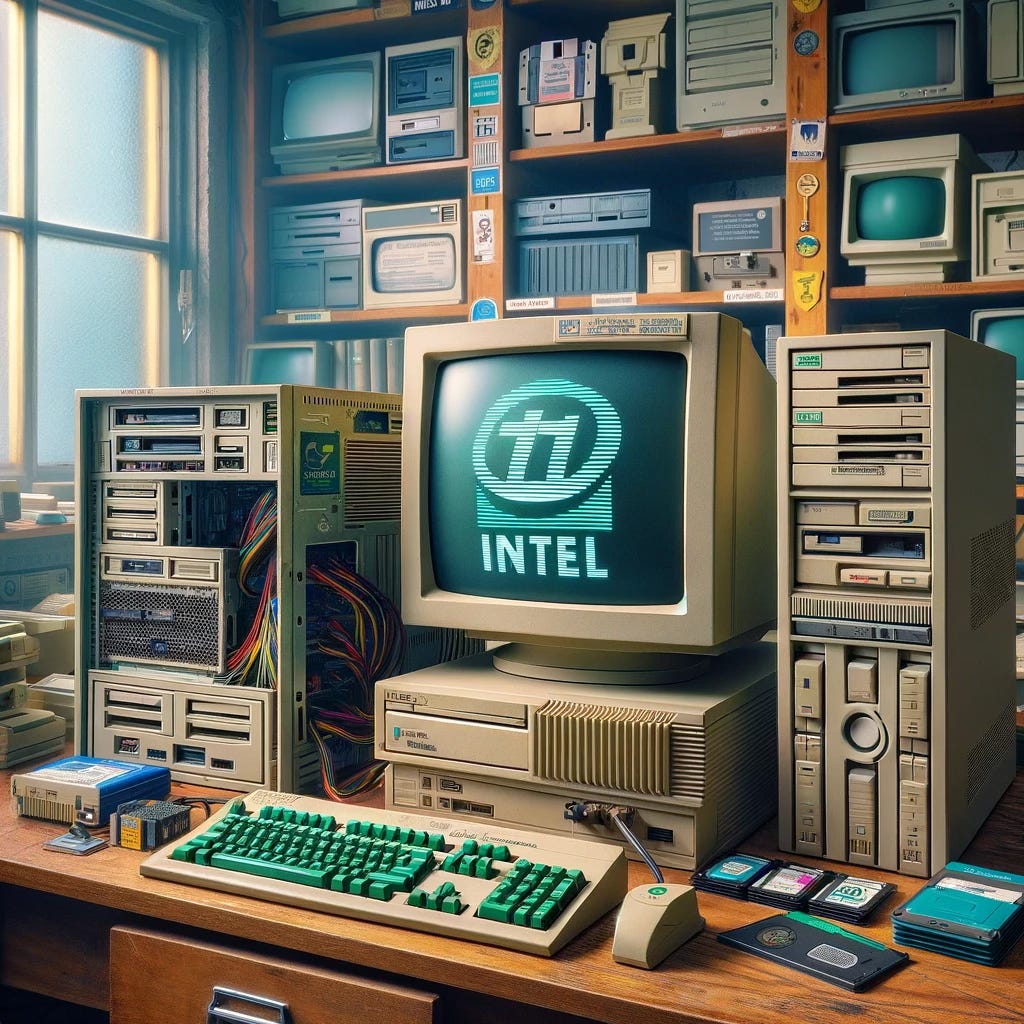
Growing up as a teenager, Intel and Nvidia were household names for me. Intel was the CPU at the heart of every single PC, followed by AMD. Nvidia, meanwhile, was the must-have graphics card if you wanted to do any kind of serious gaming. My barebones rig had both. I spent about six months building it, saving up for each component.
Twenty years later, I’ve parted company with both. I’m using Mac silicon now, which runs cooler and faster than a PC, and this means better battery life for my laptop. I’m still a PC guy, and I only use Apple for the hardware (and certainly not for the OS). Though Intel is still with us, the performance of Nvidia over the past couple of years has been phenomenal.
So, what sets these two companies apart?
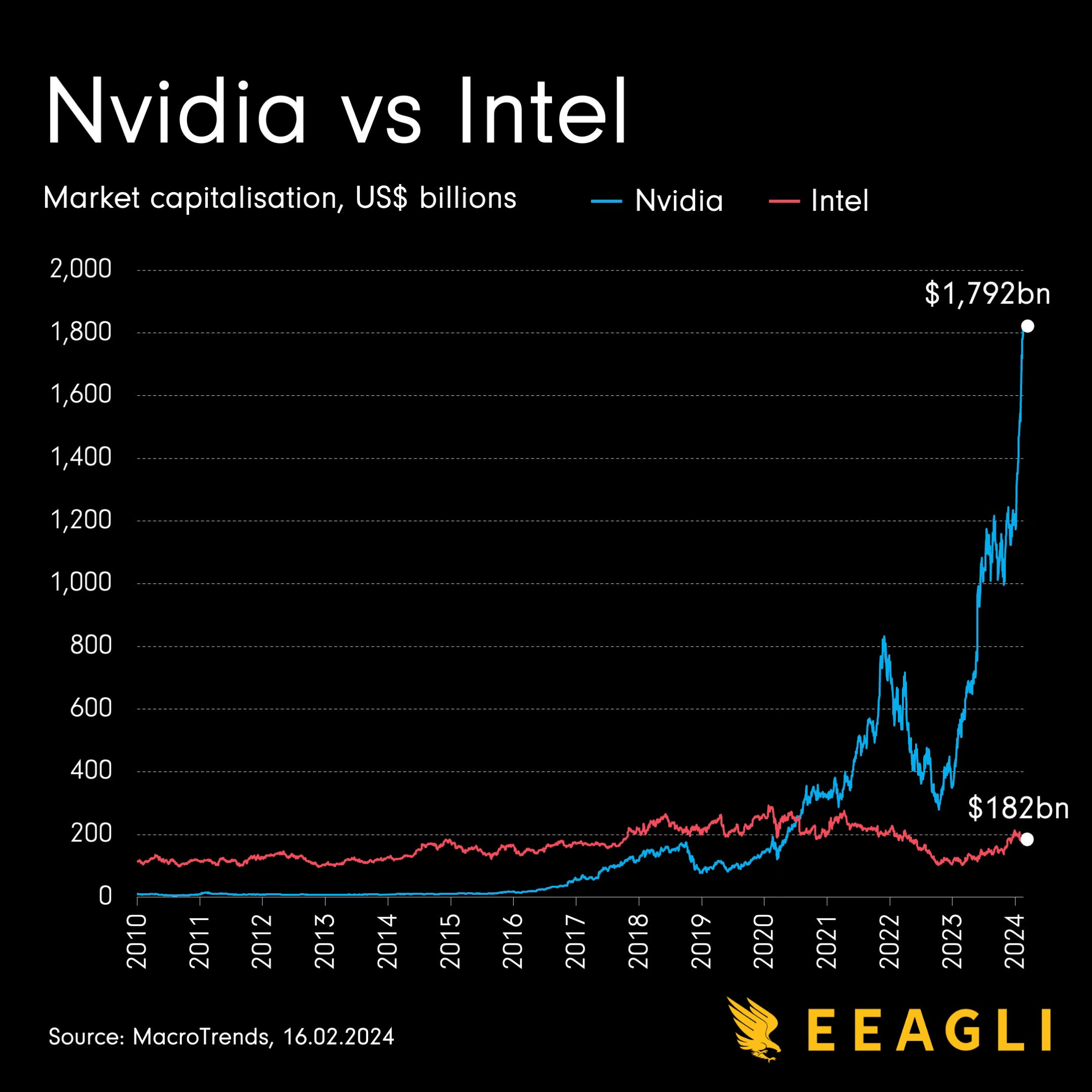
The answer is Nvidia’s market capitalisation. It has massively outpaced Intel. Intel has lost ground to Apple silicon and its arch-rival AMD. Nvidia, by contrast, has exploded off the blocks. During the pandemic, there was a large increase in demand for GPUs due to a rise in at-home entertainment, which further pushed the demand for high-performance graphics cards because we were locked up at home with nothing to do.
Moreover, GPUs were also in high demand during the pandemic because they are particularly well-suited to the parallel processing that AI algorithms require. They were used to analyse large datasets to track the spread of the Coronavirus, process large-scale simulations to predict the outcomes of various public health interventions and aid in the development of vaccines.
Then ChatGPT happened at the end of 2022 and the stock price exploded as the AI craze spread. Overall, investors seem more optimistic about Nvidia's positioning and future prospects than about Intel. And that’s the story behind the first chart.
Coming up:
Annual number of land animals slaughtered for meat
The options market is pricing in 5,030 for the S&P 500
Inflation is set to be much lower in 2024
Working hours have significantly declined over the centuries
If you like what you see here, and you would like to view the other four charts, consider becoming a paid subscriber. It costs less than two cups of coffee for a whole month’s access.
