

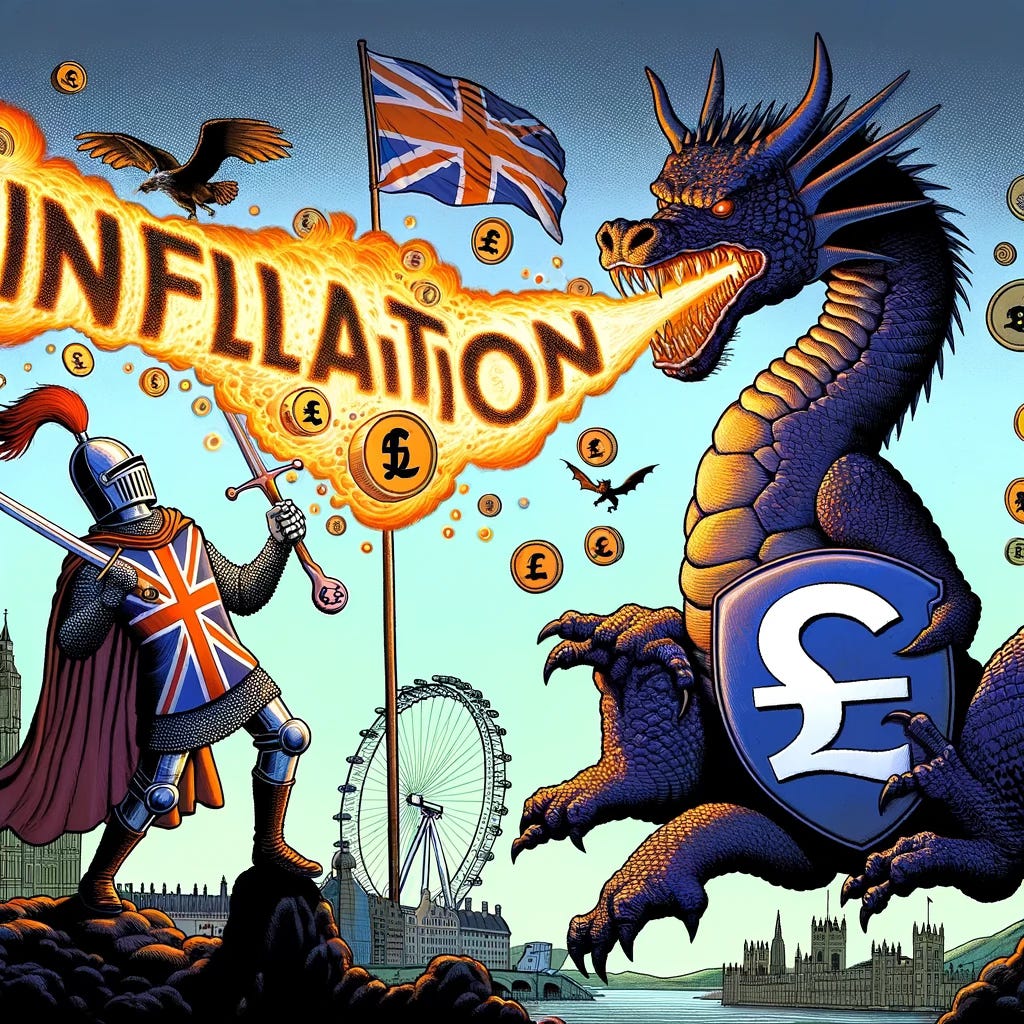
There was a dramatic fall in headline inflation in the UK during February. Okay, that's an exaggeration. But if you listened to UK Prime Minister Rishi Sunak, that is what happened – backslaps all around; this is the end of the cost-of-living crisis.
If you are wondering what this is about take a look at Rishi's latest LinkedIn post, which I actually quite like. It's a nice little chart.
It might be a bit premature to say that the guns have fallen silent on inflation and that the cost-of-living crisis has ended. However, there is some merit behind the story here.
The UK appears to be experiencing immaculate disinflation – inflation is falling, but the UK economy isn't. To be fair, the UK economy is resting at a low base, and there is now optimism that economic growth will eventually rise.
There's lots to take away from this. The Bank of England may feel more inclined to cut interest rates in the not-too-distant future. The UK is also likely to preserve full employment as inflation falls, which is unusual.
So what's the story here?
It's the type of inflation that the UK has experienced. Inflation was pushed up by cost-push forces such as rising energy and food prices, which have since moderated. These are not things the UK government or the Bank of England can influence. This is transitory inflation (see the second chart for today). You just have to wait until it passes and bear the brunt of the economic pain. Of course, Rishi isn't going to tell you that; instead, he'll take credit.
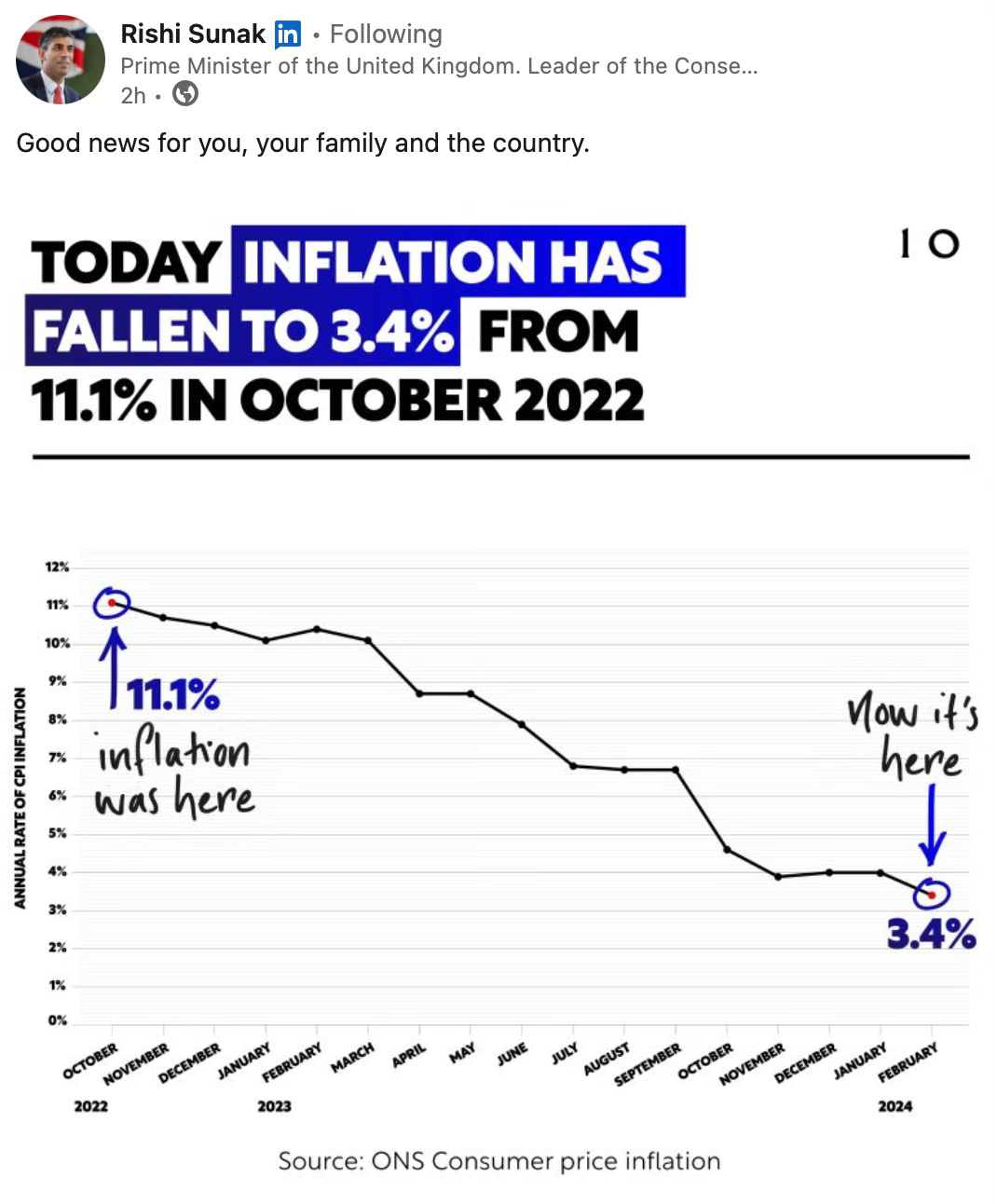
Source: Rishi Sunak
Coming next:
Energy and food prices have fallen from their peaks
Brazil's core inflation is now lower than the US
US hard landings and soft landings since 1954
Bitcoin ETF inflows go into reverse
If you like the sound of that line up, this is usually a paid newsletter. You basically get all my best ideas daily. Hit the subscribe button if you are interested and this will be sent to your inbox daily.
