

For $10 a month, or $100 a year, you support a simple mission: spread great data visualisation wherever it comes from. You help fund the work of finding, sourcing and explaining the charts that deserve a wider audience. And you back a publication built on generosity, transparency and the belief that better understanding makes a better world.CHART 1 • Fentanyl deaths in the US show signs of retreat
For more than a decade the rise of fentanyl has been one of the most devastating public health crises in the United States. Monthly overdose deaths climbed from just 265 in early 2013 to nearly 7,000 at their peak in 2023, reflecting the rapid spread of an extremely potent synthetic opioid across the country.
The latest data suggests that the trend may finally be turning. Monthly deaths have fallen sharply from the peak, dropping to just over 3,000 by late 2024 and continuing lower in provisional figures for 2025. While the numbers remain tragically high, the decline marks one of the first sustained reversals since the crisis began.
Several factors may be contributing to the shift. Greater availability of overdose reversing drugs, improved public health responses and changes in the illicit drug supply may all be playing a role. Even so the long rise shown in the data is a reminder of how quickly synthetic drugs can reshape public health outcomes once they become embedded in the market.
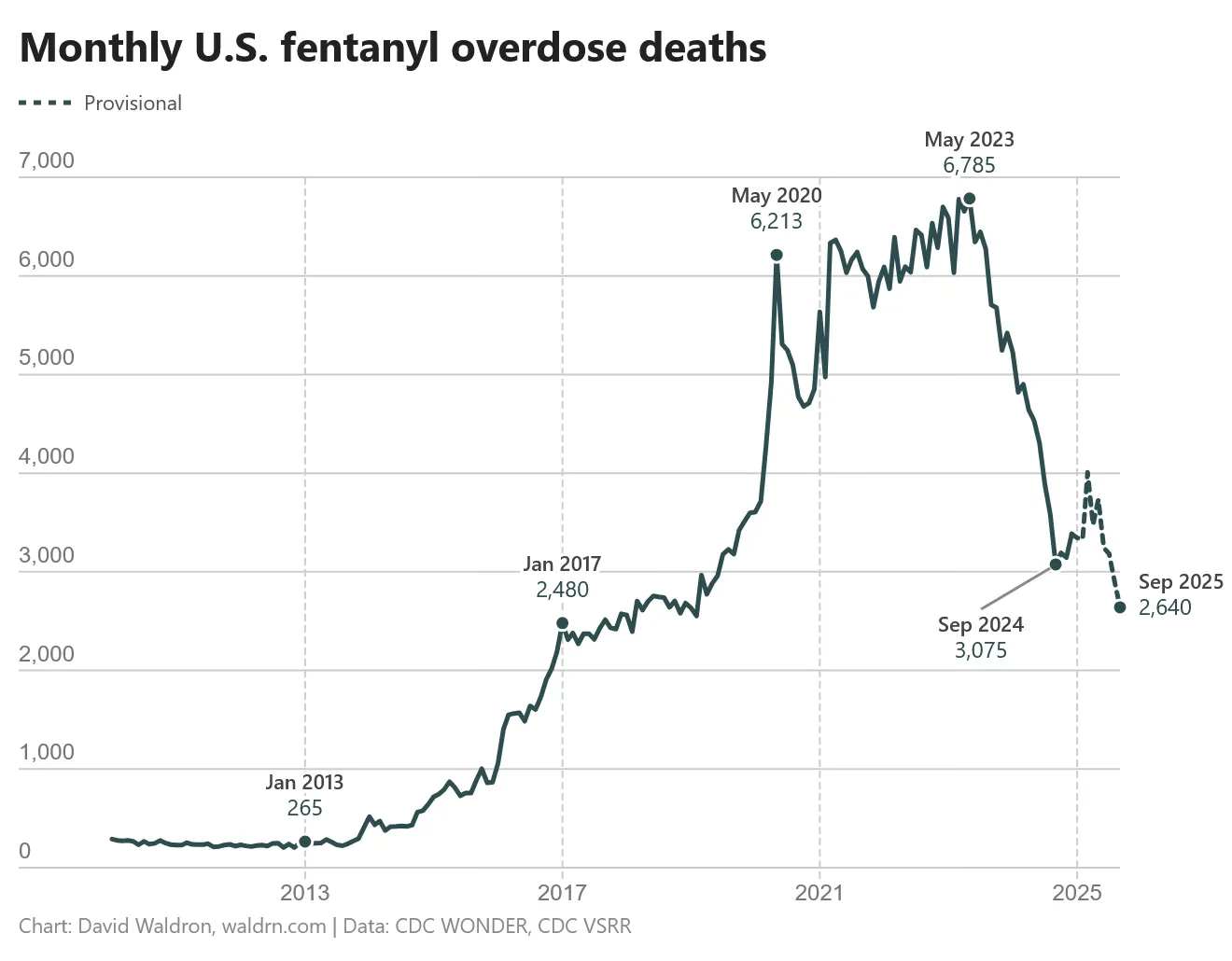
Source: David Waldron
Some of the most important shifts in the world right now are not about acceleration, but about limits. Trends that felt relentless are starting to slow, fragment, or run into resistance.
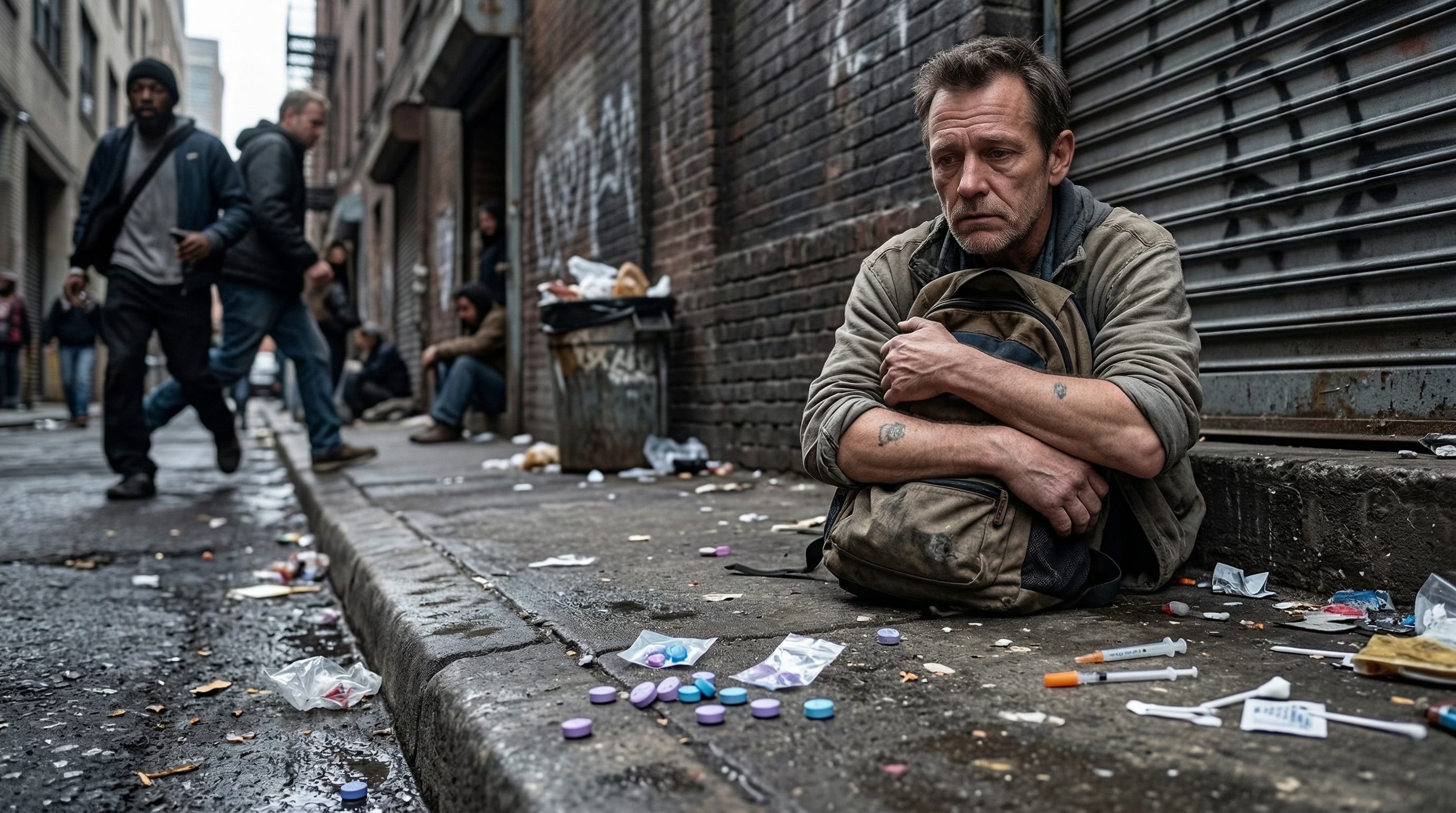
You can see that most clearly in public health. After years of devastation, fentanyl deaths in the United States are finally declining. The numbers remain severe, but the direction has changed. It is one of the first signs that even the most entrenched crises can turn, given enough intervention and adaptation.
I’ve got four more charts, but they’re for paid subscribers. Consider joining if you want the full edition.

