


For $10 a month, or $100 a year, you support a simple mission: spread great data visualisation wherever it comes from. You help fund the work of finding, sourcing and explaining the charts that deserve a wider audience. And you back a publication built on generosity, transparency and the belief that better understanding makes a better world.
CHART 1 • Diesel is surging globally
I got a bit of criticism last week when I published a chart showing that US diesel prices had now surpassed $6 per gallon.
A few people made the point that diesel prices in the UK have now risen to almost £2 per litre, which in dollar terms would equate to about $10 per US gallon, significantly higher than $6. In Switzerland, where I live, diesel prices are almost CHF2.5 per litre, which in sterling terms is £2.28 per litre, significantly higher than current UK levels.
The thing is people, it’s all relative. You need to look at the second derivative: the speed and magnitude prices have risen. This is the real shock factor that an economy experiences. The absolute price level doesn’t mean much because an economy has already adapted to that price level.
For instance, the US economy may have adapted to diesel at $4 per gallon, but a sudden rise to $6 is a 50% increase. It’s the speed and pace of the rise that causes the shock, even if diesel prices in the US still seem cheap by international standards.
What I like about this chart is that it shows rising diesel prices as a global problem. As you can see, there has been a dramatic surge in diesel prices across Europe, North America and Asia. So forget about the absolute level diesel costs in different regions and worry more about inflationary effects of a sudden rise in prices.
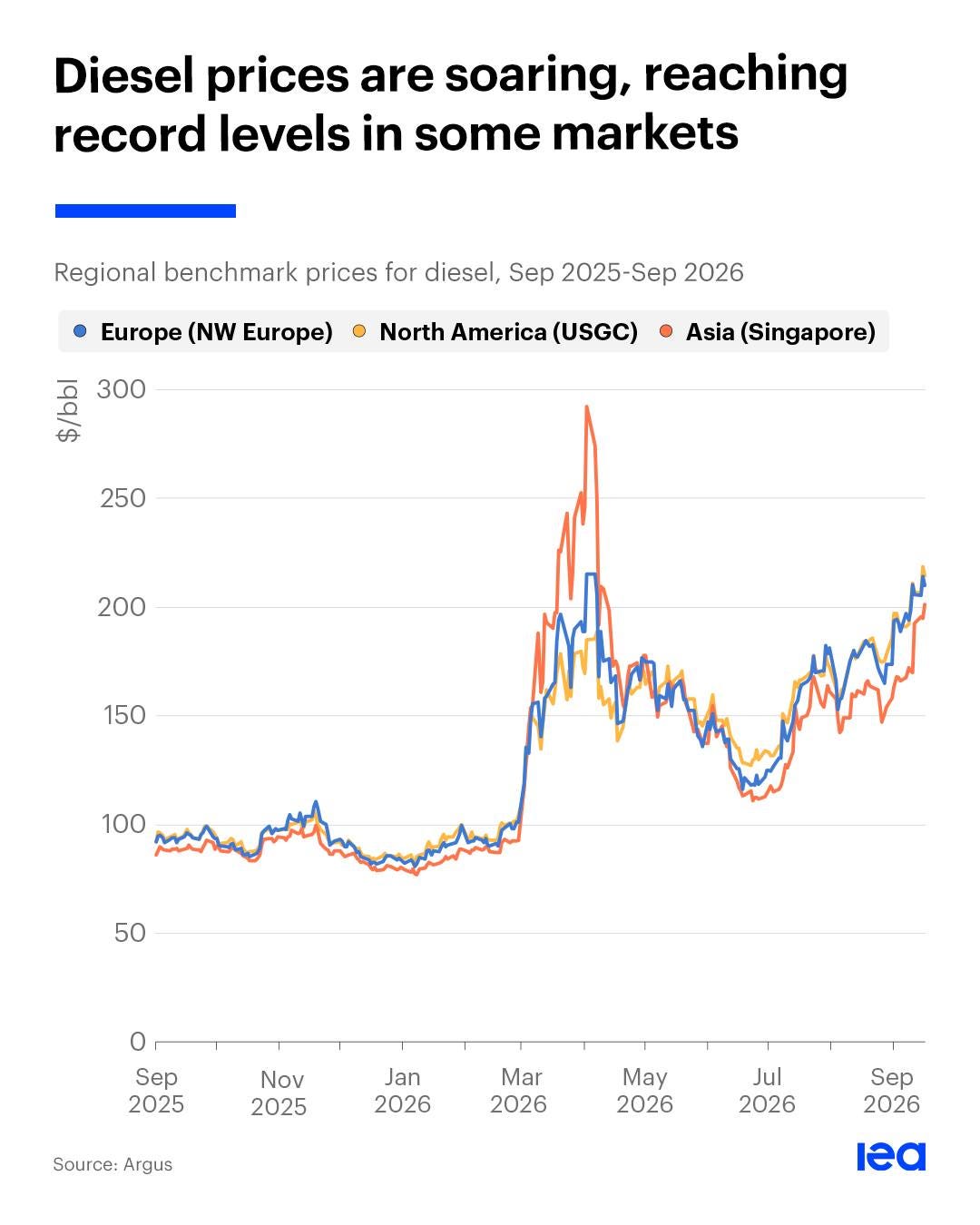
Source: IEA
Paid subscribers get access to the other four charts: Asian LNG demand, Europe’s gas cushion, Qatar’s gas income and concentrated fertiliser trade. Together, they show how war and shipping disruption spread through markets that cannot replace supply quickly.
