

For $10 a month, or $100 a year, you support a simple mission: spread great data visualisation wherever it comes from. You help fund the work of finding, sourcing and explaining the charts that deserve a wider audience. And you back a publication built on generosity, transparency and the belief that better understanding makes a better world.
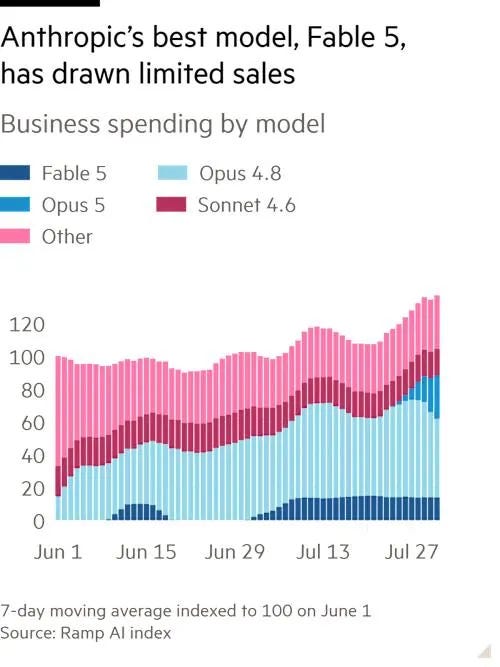
CHART 1 • Anthropic grew without Fable 5
Anthropic’s most capable model was not the one businesses spent most on. For technology and compliance teams, Fable 5’s small share shows why choosing maximum capability can bring higher bills and stricter data rules without becoming the sensible default. Measured Anthropic spending rose roughly 35% from early June to late July, yet Fable finished at only about 11% of the total.
I think the revealing comparison is with Anthropic’s own cheaper models. Opus 4.8 remained the largest named category, while Sonnet 4.6 and other models retained substantial shares. Opus 5 also attracted spending within days of its late-July launch. Anthropic priced it at half Fable’s token rates. Fable, meanwhile, disappeared from the series during a suspension from 12 June to 1 July and initially came with stricter data-retention terms.
Source: Financial Times
Price, availability and privacy requirements all plausibly contributed to that mix, although Ramp’s spending data cannot tell us how much each factor mattered. They cover more than 70,000 US businesses, not global revenue, workloads or model quality. Seeing Fable’s narrow, interrupted layer inside a growing stack changes the diagnosis: Anthropic was gaining business, but customers appeared to be matching different jobs to different models rather than paying for its flagship every time.
Paid subscribers get access to the other four charts: ChatGPT’s web traffic, consumer memory prices, Anthropic’s $30tn market ceiling and Africa’s possible AI dividend. Together, they show why adoption is only the beginning of the economic argument.
