For $10 a month, or $100 a year, you support a simple mission: spread great data visualisation wherever it comes from. You help fund the work of finding, sourcing and explaining the charts that deserve a wider audience. And you back a publication built on generosity, transparency and the belief that better understanding makes a better world.CHART 1 • America has reopened the lunar race
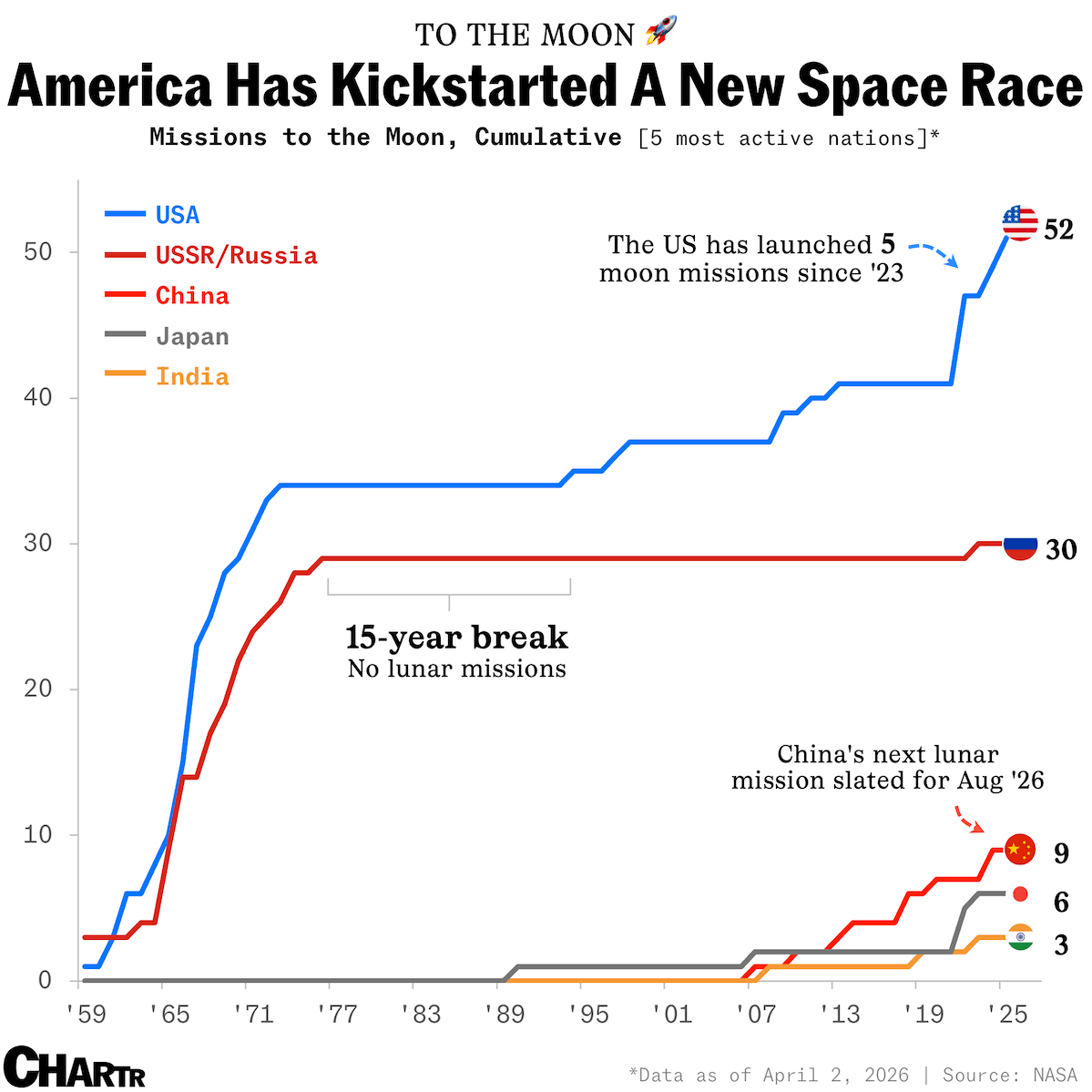
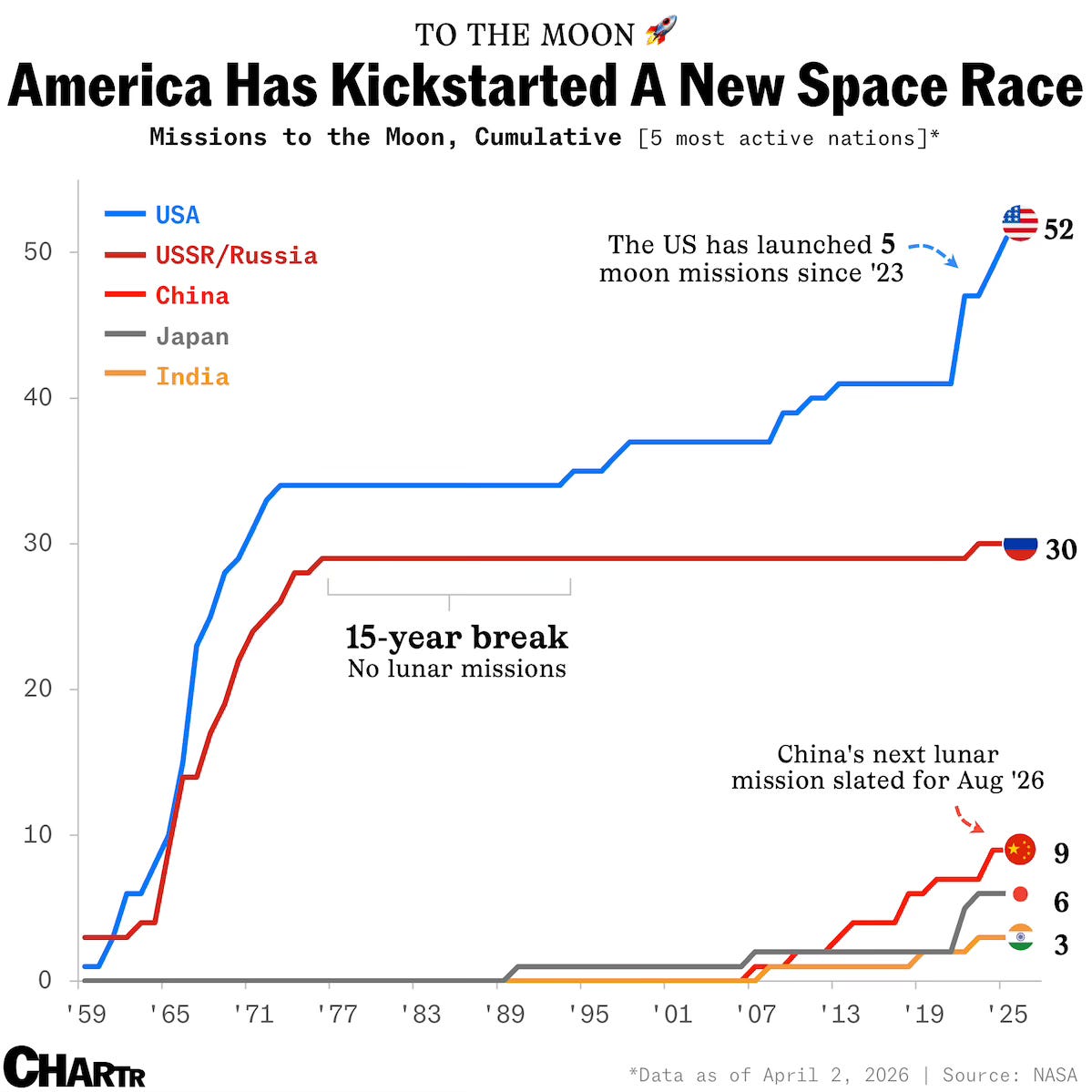
Artemis II matters because it ended one of the strangest gaps in modern exploration. Reuters reported that NASA’s flyby was the first crewed mission to the Moon in more than 50 years and took astronauts farther from Earth than any humans had ever travelled. That alone helps explain why the American line in this chart starts moving again after such a long pause.
The broader point is that the Moon is no longer just a historical trophy. It is becoming strategic ground again. The US now leads this tally with 52 cumulative lunar missions, while China has reached 9 and is preparing its next step as it pushes towards a crewed landing by 2030. Reuters reports that China’s programme is advancing steadily, with Chang’e 7 and the wider lunar architecture aimed at building towards a longer term presence.
That is what gives the chart its real edge. America has not simply returned to the Moon for nostalgia. It has restarted a competition that had gone dormant. Artemis II was a reminder that lunar power still belongs to a very small club, and that the race is now active again rather than merely remembered.
Source: Chartr
A return to the Moon can signal renewal or rivalry. A record breaking tower can mean confidence or overreach. A giant IPO can look like democratisation or a reminder that ordinary investors arrive late. Even a slower housing market can feel either healthy or faintly unsettling, depending on what people thought property was supposed to do.
That is probably the real theme here. We still crave symbols of advancement, but they no longer carry one obvious meaning. They tell us something important about power, ambition and wealth, though not always what their builders intended.
I’ve got four more charts that expand on this story, but they’re for paid subscribers. Consider joining if you want the full edition.