


For $10 a month, or $100 a year, you support a simple mission: spread great data visualisation wherever it comes from. You help fund the work of finding, sourcing and explaining the charts that deserve a wider audience. And you back a publication built on generosity, transparency and the belief that better understanding makes a better world.
CHART 1 • AI’s new bottleneck is memory
SK Hynix and Micron are not household AI names, but they sit inside the part of the boom that now matters most: capacity. If Nvidia’s chips are the engines, high-bandwidth memory is the fuel line. Without enough of it, expensive AI processors cannot run efficiently.
Bloomberg’s chart shows investors waking up to that bottleneck. The money is no longer flowing only to model builders and cloud platforms; it is spreading to the suppliers that determine how fast the AI buildout can actually happen.
You do not need to own the stocks for this to matter. If memory stays tight, AI gets more expensive to deploy, the winners change, and companies promising cheap intelligence face a harder margin story. Memory is still cyclical, so today’s bottleneck can become tomorrow’s glut.
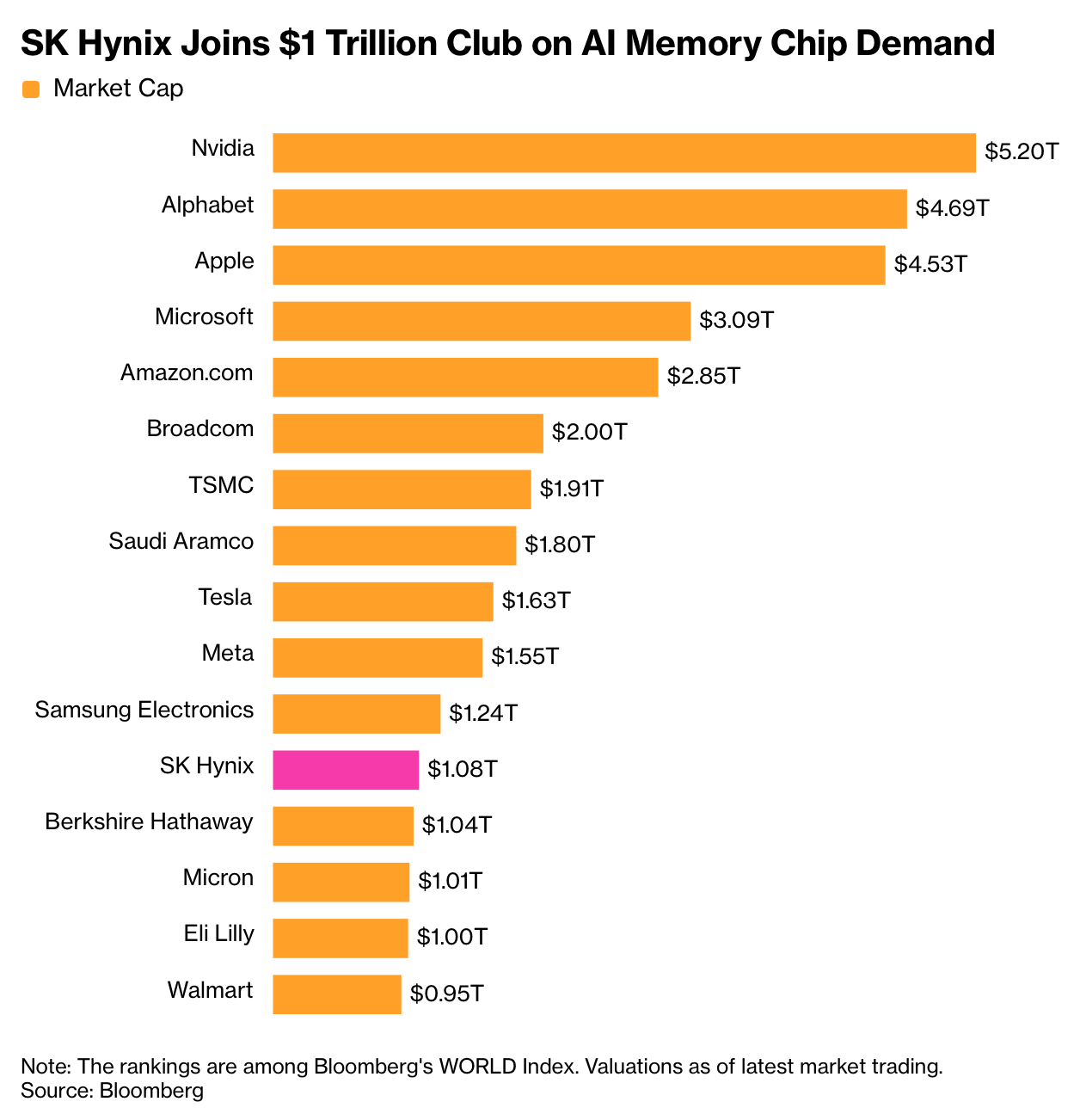
Source: Bloomberg
One useful way to read AI now is to ask where the magic becomes an invoice. Models may feel weightless to users, but the real system is made of memory, electricity, distribution, talent and policy choices.
That material world leads to the real questions: who already owns the customer relationship, who pays for each extra token, and how much of America’s AI edge depends on people trained elsewhere being allowed to build there.
