

For $10 a month, or $100 a year, you support a simple mission: spread great data visualisation wherever it comes from. You help fund the work of finding, sourcing and explaining the charts that deserve a wider audience. And you back a publication built on generosity, transparency and the belief that better understanding makes a better world.CHART 1 • Africa is being left behind in the electricity race
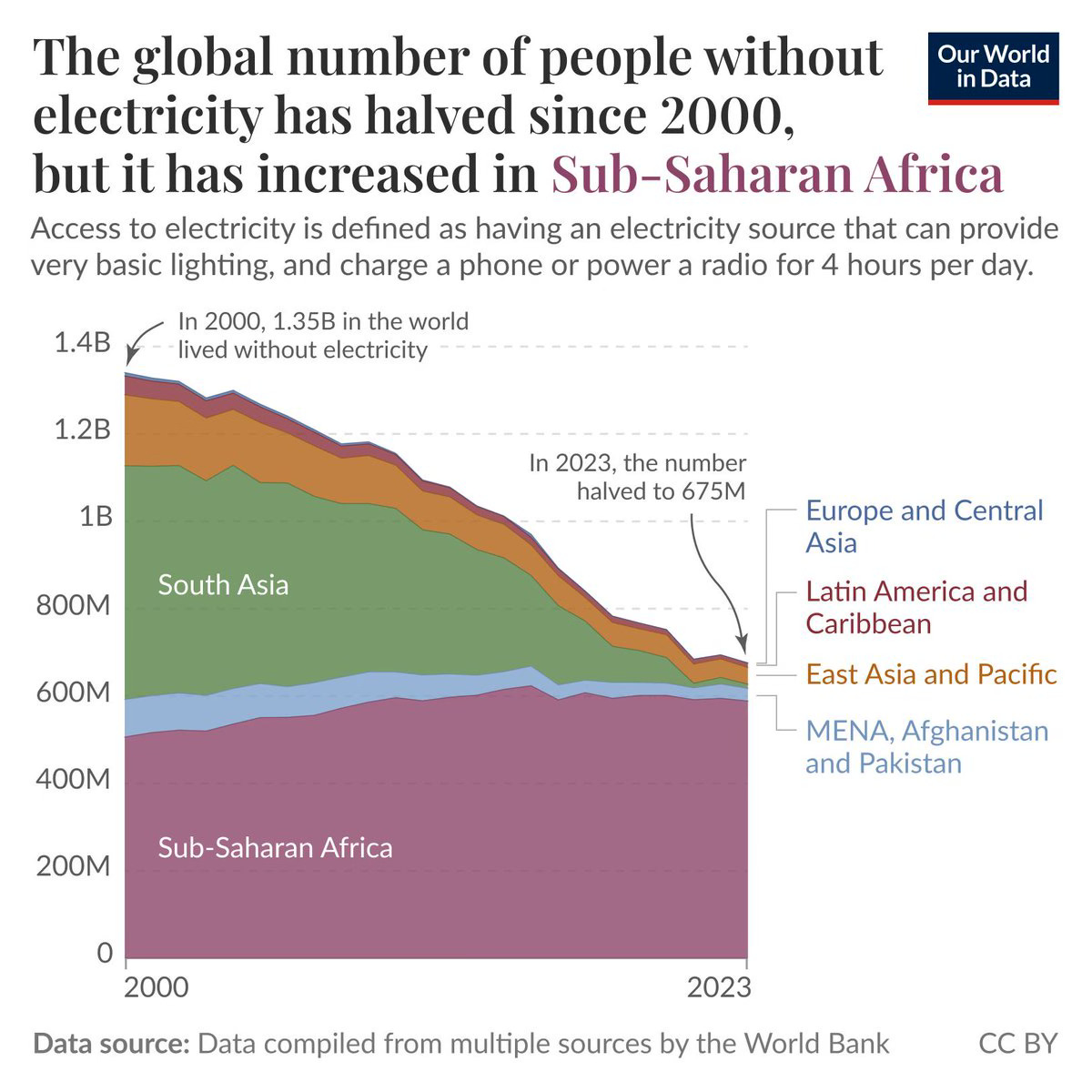
The world has made real progress on electricity access, but the victory is uneven. The number of people without power has fallen from 1.35 billion in 2000 to 675 million in 2023, yet the burden is now concentrated in Sub Saharan Africa.
The complication is that Africa has not stood still. Access in Sub Saharan Africa has doubled from 26% to 53%, but population growth has outrun new connections. So the share improved, while the absolute number left without electricity still rose.
That makes energy poverty less a story of failure than of scale. Basic access means enough power for light, a phone or a radio, not the electricity needed for industry, cooling, healthcare or prosperity. The next race is not connection. It is usable power.
Source: Our World in Data
What worries me about the energy transition is not the direction of travel. It is the assumption that direction is enough. A country can add solar panels and still need nuclear. It can sell electric cars and still leave poorer households behind. It can promise electrification, then collide with old buildings, weak grids and winter.
Progress is real, but progress is not evenly distributed. That is the uncomfortable lesson in from data. The future does not arrive everywhere at once. It arrives first where infrastructure, money and politics allow it to land.
I’ve got four more charts that expand on this story, but they’re for paid subscribers. Consider joining if you want the full edition.
