


For $10 a month, or $100 a year, you support a simple mission: spread great data visualisation wherever it comes from. You help fund the work of finding, sourcing and explaining the charts that deserve a wider audience. And you back a publication built on generosity, transparency and the belief that better understanding makes a better world.CHART 1 • A quiet shift in America’s pain treatment
Gabapentin prescriptions have climbed to nearly 70 million a year. As the US clamped down on opioid prescribing, the drug was promoted as a safer alternative for chronic pain and anxiety. Prescribing accelerated, especially after the CDC signalled support for its use.
This has changed the pain market. Many patients now rely on gabapentin where opioids once dominated. But it has not come without concerns. The drug is widely used off label, can be addictive for some, and is now appearing more often in overdose cases. Several states are even considering tighter controls.
America may have reduced opioid scripts, but it has replaced them with something else entirely. The question is whether this shift has improved outcomes or just reshaped the problem.
Do you think the US has genuinely solved the prescription pain crisis or only changed its form?
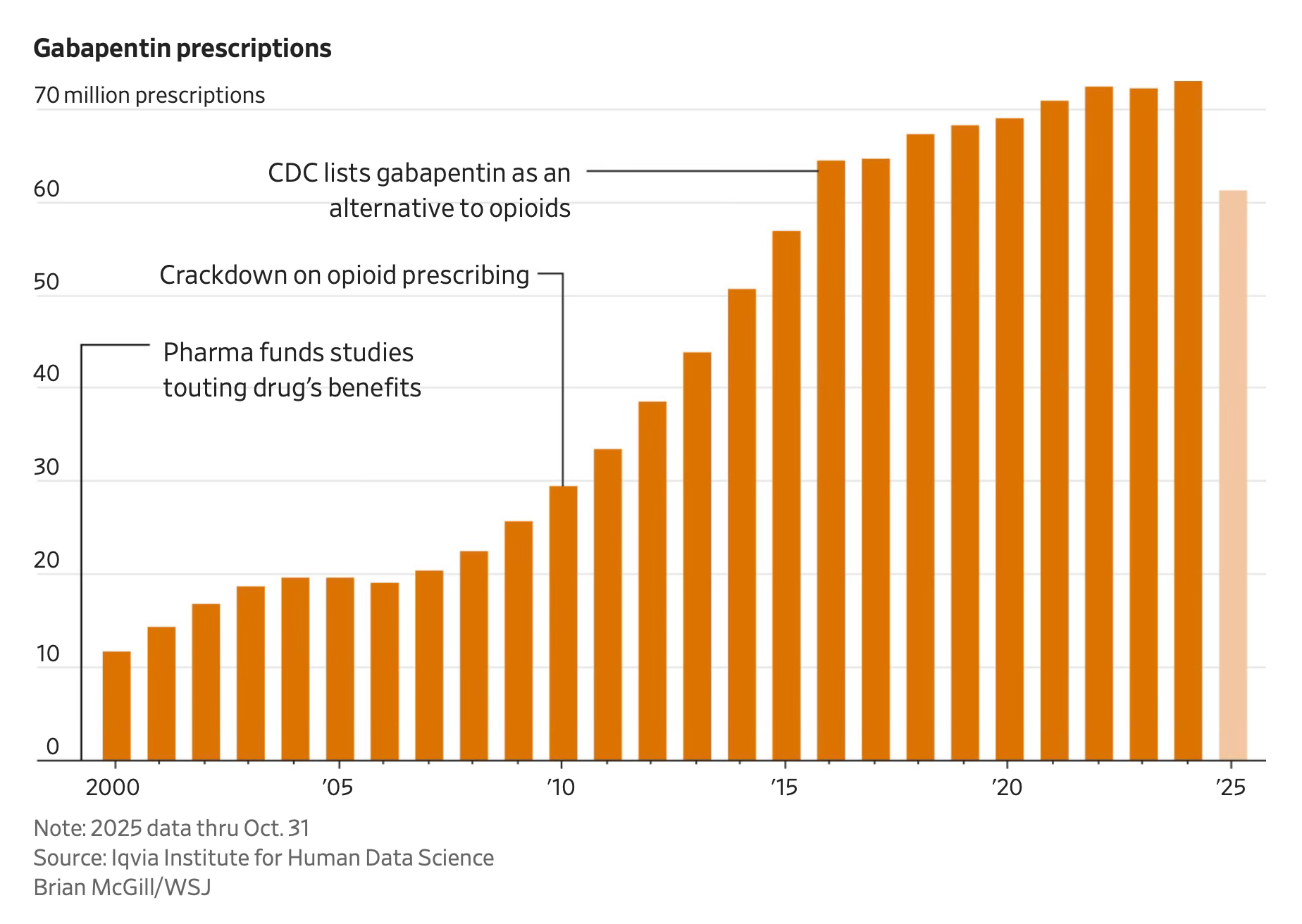
Source: Wall Street Journal
All of these trends raise a simple question. Are we getting healthier and more secure, or just changing the way our problems look on paper? Progress is only progress if the outcomes improve in real lives, not only in statistics.
I have four more charts that expand on this theme, but they are for paid subscribers. Consider joining if you want the full edition.
